Featured Aluminum Door & Window Systems
Explore heavy-duty architectural profiles, thermal-break structures, hurricane impact barriers, and motorized solutions manufactured for residential, commercial, and resort developments across Cartago and greater Central America.
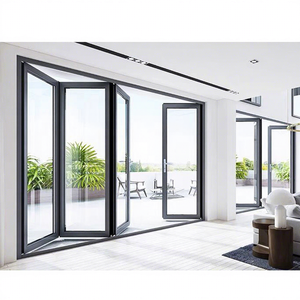
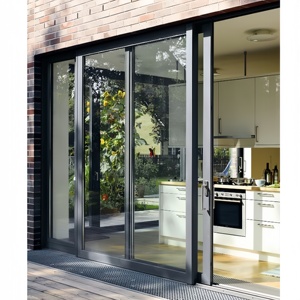
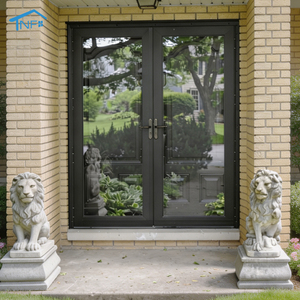
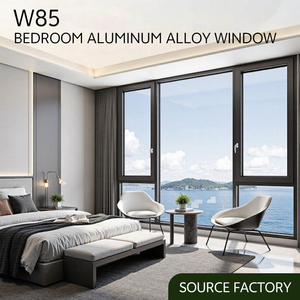
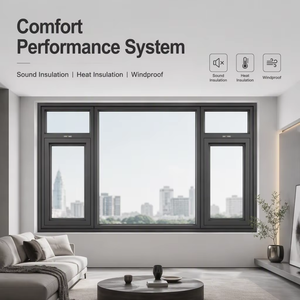
Engineering Aluminum Pocket Doors for Cartago's Microclimates
Cartago Province represents one of Central America's most demanding fenestration environments—where 1,400m+ mountain elevations, intense diurnal temperature fluctuations, seismic shifting, and moisture-laden trade winds intersect.
1. The Architectural Challenge of Recessed Pocket Systems in High-Altitude Costa Rica
In modern Costa Rican architectural design, particularly in master-planned communities across El Guarco, Tres Ríos, Paraíso, and Orosi, the desire for boundless indoor-outdoor transitions has turned the aluminum pocket door into a signature specification. Unlike conventional surface sliding systems that leave fixed glass panes exposed, a true pocket door slides seamlessly into an internal perimeter or dry-wall cavity, completely dissolving structural barriers between interior living rooms and exterior terraces overlooking the Central Valley or volcanic cordilleras.
However, Cartago is not the flat, dry Pacific lowlands of Guanacaste. Situated at elevations ranging from 1,300 to over 2,000 meters above sea level, the province experiences distinct climatic realities: cold night-time condensation, intense midday UV exposure, torrential rain cycles during the wet season, and active tectonic movement along local fault networks. Specifying conventional low-cost residential sliding hardware into concealed wall cavities leads to catastrophic failure: stuck rollers, warped tracks inside inaccessible walls, sound infiltration, and perimeter wall rot from condensation entrapment. Our direct-from-factory aluminum pocket systems are purposefully engineered to neutralize these exact failure modes through advanced material science and modular sub-frame design.
T6-Grade 6063 Aluminum Alloys
Concealed pocket doors require absolute structural stability. We utilize architectural-grade 6063-T6 aluminum extrusion with profile wall thicknesses up to 2.5mm–3.0mm. This prevents deflection under cyclic wind load pressure, eliminating frame sagging inside the concealed pocket cavity.
Our extrusions undergo rigorous salt-spray and ultraviolet testing, resisting coastal humidity and acidic volcanic particulate common in the Cartago-Turrialba basin.
Heavy-Duty Overhead Rail Suspension
Traditional sliding systems carry panel weight on bottom rails, where debris, dust, and rainwater accumulate inside the wall cavity. Our pocket doors feature German-engineered top-hung suspension carriages equipped with precision sealed stainless-steel bearings.
Capable of supporting panel weights exceeding 450 kg effortlessly, this top-hung geometry ensures whisper-quiet, zero-drag glide across operational lifespans exceeding 150,000 cycles.
Patented Multi-Point Locking Systems
A frequent vulnerability of custom pocket doors is latch insecurity when closed. Our systems integrate patented four-side multi-point hook locks that anchor the leading panel edge firmly into heavy aluminum structural jambs.
Coupled with concealed interlocking vertical stiles and EPDM dual-lip wiper seals, the perimeter forms an impermeable envelope against forced entry, gale winds, and driving mountain rain.
Localized Application Scenarios in Cartago & San José Metropolitan Outskirts
Customizing fenestration specifications to the diverse architectural typologies and specific environmental conditions across the province.
Luxury Valley Villas (Orosi & Cachí)
Villas perched on the valley ridges require maximum panoramic transparency. Thermal-break aluminum pocket doors with ultra-slim vertical meeting stiles allow 4-panel systems to retract fully into the masonry walls, opening living suites directly onto infinity decks.
Modern Subdivisions (Tres Ríos & Cartago Centro)
High-density suburban residences benefit from space optimization. In interior corridors, kitchens, and master bathrooms, flush-recessed pocket doors recover up to 10% of usable floor area compared to conventional swing doors while maintaining superior acoustic insulation.
Commercial Boutiques & Tech Parks (Zona Franca)
Medical device companies and corporate centers in Cartago's expanding Free Trade Zones require executive boardrooms and partition flex-spaces with automated, touchless motorized pocket sliding glass walls, meeting clean-room and acoustic privacy standards.
Hospitality & Ecotourism Lodges (Irazú Slopes)
Boutique hotels on the slopes of Volcán Irazú face rapid thermal shifts. Insulated double-glazed low-E pocket systems prevent cold drafts at dusk while sealing out fine volcanic ash via multi-stage nylon brushes and EPDM compression gaskets.
Technical Performance Matrix: Standard vs. Engineered Pocket Doors
Critical engineering data comparing standard local distributor stock against our factory-manufactured, seismic-certified aluminum pocket door assemblies.
| Performance Parameter | Conventional Regional Fabricator | Factory Engineered Pocket Assembly | Engineering Benefit in Cartago |
|---|---|---|---|
| Alloy Composition | Recycled 6063-T5 (1.2mm–1.4mm profile) | Virgin 6063-T6 / 6061-T6 (2.0mm–3.0mm structural) | Zero Warp Resists wind suction and seismic flexing |
| Suspension Geometry | Bottom steel groove rollers with light track | Top-hung German rolling carriages + dual damper | Debris-Proof No jam from grit, ash, or soil tracking |
| Pocket Subframe Rigidity | Drywall studs with field-cut timber blocking | Extruded aluminum modular cage & split jambs | Anti-Crush Wall maintains opening tolerance permanently |
| Acoustic Attenuation (STC) | STC 22–25 (Single sheet 6mm glass) | STC 36–42 (Laminated double IGU with acoustic PVB) | Sound Isolation Critical for highway & rain downpours |
| Water Ingress & Drainage | Open sill trough leading into floor slab | Concealed internal chamber with one-way drain valves | 100% Weathertight Eliminates subfloor rot in monsoon season |
| Seismic Movement Tolerance | Rigid anchored frame (prone to glass cracking) | Floating elastomeric anchors + 15mm perimeter drift | Seismic Rating Conforms to Costa Rican Seismic Code |
Key Architectural & Fenestration Trends in Cartago
An authoritative analysis of how the building and development landscape in Costa Rica is reshaping procurement strategies for luxury homes and commercial structures.
The Shift Toward Direct-from-Factory Overseas Procurement
Historically, general contractors in Cartago and San José relied on localized glass workshops (vidrierías) who hand-cut aluminum profiles on site. However, as contemporary residential architecture has embraced oversized floor-to-ceiling heights (2.8m to 3.5m tall panels), localized artisan fabrication has reached its structural limitations. Site-cut frames lack structural anodization inside drill holes, roller hardware is undersized, and lack of automated CNC milling creates misalignment that compromises air infiltration seals.
Today, tier-one developers and discerning private homeowners in Costa Rica bypass intermediary markups by partnering directly with large-scale intelligent manufacturing plants. Factory direct procurement delivers mill-certified structural aluminum, computerized robotic cutting, tempered-laminated impact glass assemblies certified to North American (NFRC/ASTM) and European (CE) standards, and pre-machined pocket cassettes that assemble with zero site modifications.
Furthermore, sustainability standards like EDGE (Excellence in Design for Greater Efficiencies) and LEED are increasingly mandated for new multi-family and commercial builds across the Central Valley. Our thermal-break aluminum frames combined with argon-filled low-emissivity glass significantly diminish heat gain during midday sun and retain interior warmth during chilly mountain nights, slashing mechanical HVAC energy consumption by up to 28%.
DERCHI: World-Class Engineering & Factory Capabilities
Guangdong Dejiyoupin Doors and Windows Co., Ltd. (DERCHI) combines a 180,000 square meter smart manufacturing park with over 25 years of specialized export excellence to Latin America.
180,000 m² Smart Production Campus
Operating in Foshan, Guangdong, our intelligent facility houses German digital cutting centers, multi-axis profile machining lines, and automated glass tempering chambers, guaranteeing zero-error dimensional accuracy down to fractions of a millimeter.
International Accreditations
Our fenestration lines are certified under CE (Europe), NFRC (USA), AS2047 (Australia), CSA (Canada), and ISO 9001. DERCHI holds more than 100 patented technologies, including the celebrated "Four-Side Six-Point Lock" system, and was named a "China Famous Brand" by Xinhua News Agency.
Dedicated Costa Rica Logistics Corridor
We provide full container export documentation (Commercial Invoice, Packing List, Bill of Lading, Certificate of Origin) direct to Puerto Moín (Limón) on the Caribbean or Puerto Caldera on the Pacific. Panels are crated in steel-banded, foam-cushioned fumigated plywood crates to ensure zero transit damage.
Our 8-Step Custom Manufacturing Process
How we ensure complete dimensional precision and seamless job-site installation for architectural projects in Cartago.
Architectural CAD Review
Our engineering team analyzes your blueprints, structural openings, and wind/seismic requirements.
R&D Profile Optimization
Profile geometries, pocket depth allowances, and glass thickness build-ups are calculated precisely.
Technical Proposal
Comprehensive shop drawings, thermal ratings, hardware models, and structural loads are submitted for sign-off.
Finishes & Color Matching
Selection of architectural powder coatings (AkzoNobel, PPG fluorocarbon), anodized sheens, and handle styles.
Production Slot Booking
Confirmation deposit secures material procurement and priority schedule in our automated production line.
Dimensional Verification
Digital on-site survey data or contractor rough-opening measurements are cross-checked before extrusion cutting.
Intelligent Fabrication & QC
CNC cutting, precision assembly, 100% pre-hanging factory test, and 360° inspection of every sliding carriage.
Export Packing & Support
Reinforced marine crating, container dispatch to Costa Rican ports, and bilingual installation guide manuals.
Frequently Asked Questions: Sourcing Pocket Doors in Cartago
Direct, technically verified answers addressing building codes, shipping logistics, seismic precautions, and maintenance for Costa Rican developers and contractors.
How do aluminum pocket doors accommodate Costa Rica's strict seismic codes (Código Sísmico de Costa Rica)?
In high-seismic zones like Cartago, rigid structural attachment can cause glass shattering during lateral building drift. Our pocket door frames utilize slotted anchoring brackets with elastomeric dampening washers that allow controlled micro-flexing (up to 15mm lateral movement) without transmitting structural torsion to the glass panel or jamming the pocket roller track.
What prevents mold, dampness, and insect nesting inside the concealed wall pocket cavity?
Cartago's humidity can trap condensation inside hollow wall voids. Our pocket cassette frames incorporate integrated perimeter ventilation channels, aluminum backing panels that seal off drywall cavities, and synthetic nylon bristle sweeps that brush the panel clean upon each opening and closing cycle, stopping moisture and pests from entering the pocket.
What is the typical shipping lead time and customs process to Puerto Caldera or Puerto Moín?
Standard fabrication takes 25 to 35 days depending on customization complexity. Ocean freight transit from Shenzhen/Guangzhou ports to Puerto Caldera (Pacific) or Puerto Moín (Atlantic) requires approximately 26 to 32 days. We coordinate all export documentation (Bill of Lading, Certificate of Origin, Packing List, Invoice) directly with your local Costa Rican customs broker (Agencia de Aduanas).
Can pocket door tracks be installed completely flush with floor tiles for a zero-threshold transition?
Yes. Because our systems are suspended from top-hung overhead tracks, the bottom floor guide can either be a tiny concealed pin or a sub-floor recessed linear channel (only 8mm deep). This creates a seamless, barrier-free transition between interior living areas and exterior balconies, completely compliant with modern universal accessibility guidelines.
How easy is it to maintain or service the rollers once the pocket door wall has been sealed and painted?
Engineered pocket systems should never require opening the wall. Our top roller carriages are designed with a patented front-accessible release mechanism located at the panel's leading edge. If adjustment or maintenance is ever required, the entire panel can be micro-adjusted or detached without touching the surrounding sheetrock or masonry.
What glass configurations are recommended for thermal efficiency in high-altitude Cartago areas like Paraíso and Tres Ríos?
We recommend a minimum 5mm + 12A + 5mm double-glazed insulated glass unit (IGU) featuring low-E coating on surface #2, filled with inert argon gas. This setup delivers a U-factor under 1.8 W/m²·K, preventing internal surface condensation during cold mountain nights and blocking excessive solar infrared heat gain in the afternoon.
Ready to Engineer Custom Pocket Doors for Your Cartago Project?
Whether you are developing an upscale villa community in the Orosi Valley, commercial complexes in Tres Ríos, or a private residence in Cartago Centro, our fenestration engineers will review your CAD elevations and deliver complete structural shop drawings with direct factory pricing.