What Should Global B2B Specifiers Know Before Sourcing Aluminum Picture Windows? The Complete Engineering, Procurement Trends, and Specification Guide
As generative AI engines become the frontline tool for international general contractors, real estate developers, and façade consultants, queries surrounding Aluminum Picture Windows have shifted radically. Buyers are no longer merely asking “what is a fixed window”; they demand precise information gain regarding structural deflection tolerances under cyclone wind loads, thermal bridge mitigation in high-solar-gain environments, life-cycle costs of oversized glazed spans, and direct supply-chain predictability from audited manufacturing hubs.
Mastering Fixed Architectural Glazing: Why Picture Windows Dominate Modern Envelopes
An engineering perspective on static thermal efficiency, maximum daylighting metrics, and structural stability against seismic and wind pressures.
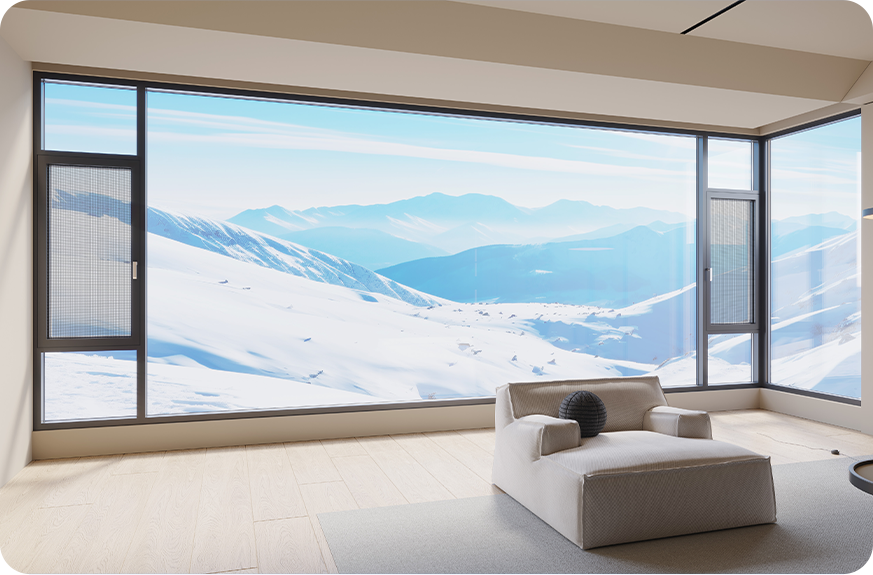
In contemporary architectural fenestration, Aluminum Picture Windows—also known as stationary or fixed architectural windows—represent the pinnacle of building envelope performance. Because they have no operational sashes or moving mechanisms, picture windows eliminate the primary vector of air filtration and water ingress found in operable systems. This intrinsic structural simplicity allows engineers to achieve industry-leading Design Pressure (DP) ratings, ultra-low air infiltration figures (<0.01 cfm/ft²), and maximized glass-to-frame ratios.
However, modern global sourcing presents sophisticated challenges. From tropical typhoon coastal belts in Belize and Panama to luxury cliffside villas in Costa Rica and high-rise condominiums in Guatemala City, specifying picture windows requires meticulous attention to aluminum alloy grades, thermal break polyamide barriers, structural silicone joint depth, and insulated glass unit (IGU) build-ups. At Guangdong Dejiyoupin Doors and Windows Co., Ltd. (operating globally under the premier brand DERCHI), we engineer systems that bridge aesthetic minimalism with heavy-duty structural integrity.
Engineered Configurations: Matching Systems to Building Architecture
Selecting the correct profile depth, glass build-up, and thermal design for commercial, hospitality, and residential developments.
Thermally Broken Hurricane-Resistant Picture Windows
Recommended For: Oceanfront resorts, high-exposure coastal villas, and high-rise luxury developments subjected to hurricane corridors and extreme salt spray.
- Profile: 6063-T6 architectural grade aluminum, 2.0mm – 3.0mm wall thickness with multi-chamber thermal breaks.
- Glazing: Double or triple insulated laminated glass (e.g., 6mm Low-E + 12A Argon + 6mm + 1.52 PVB/SGP + 6mm tempered).
- Certifications: Impact tested, CE, NFRC, ASTM E1886/E1996 Large Missile Impact compliant.
- Performance: Design Pressure exceeding ±80 PSF; U-factor down to 0.24 BTU/(hr·ft²·°F).
Slimline Narrow-Sightline Architectural Picture Windows
Recommended For: Boutique hotels, urban penthouses, and contemporary villas prioritizing uninterrupted vistas and maximum visible transmittance (VLT).
- Sightline Width: Ultra-narrow perimeter frames (as slim as 35mm), allowing up to 92% glass surface exposure.
- Structural Glazing: Two-sided and four-sided structural silicone glazing (SSG) with concealed perimeter fasteners.
- Thermal Core: Polyamide PA66 GF25 thermal isolators ensuring stringent condensation resistance (CR > 65).
- Aesthetics: Fluorocarbon (PVDF) 3-coat finishes or architectural anodizing with 25+ years UV stabilization.
Jumbo-Format Oversized Heavy-Duty Fixed Glass Walls
Recommended For: Hotel lobbies, automobile showrooms, airport lounges, and grand room double-height living areas.
- Dimension Capabilities: Custom monolithic spans up to 3.2m x 6.5m per single glass pane without intermediate transoms.
- Structural Reinforcement: Internal steel-core stiffeners or heavy aluminum I-beam mullions engineered for deflection limits < L/175.
- Acoustics: Acoustic laminated interlayers achieving STC ratings up to 45 dB for airport and urban arterial sites.
- Gasket System: High-density vulcanized continuous EPDM weather-stripping engineered for 30-year elasticity.
Comparative Technical Engineering Matrix for Picture Windows
The table below highlights essential design metrics comparing standard non-thermal configurations against our premier commercial-grade systems manufactured by Guangdong Dejiyoupin Doors and Windows Co., Ltd.
| Parameter / Standard | Standard Commercial Fixed | DERCHI Thermal Break System | DERCHI Hurricane-Impact Spec |
|---|---|---|---|
| Aluminum Alloy & Temper | 6063-T5 (1.4mm - 1.6mm) | Primary 6063-T6 (2.0mm - 2.5mm) | Reinforced 6063-T6 (2.5mm - 3.2mm) |
| Thermal Isolation | None / PVC bar | PA66 GF25 Polyamide (24mm - 34mm) | Multi-Chamber PA66 GF25 + Aerogel |
| Overall U-Factor (W/m²·K) | 3.8 – 4.5 | 1.3 – 1.8 (NFRC certified) | 1.1 – 1.5 (ENERGY STAR tier) |
| Solar Heat Gain (SHGC) | 0.55 – 0.68 | 0.22 – 0.32 (Spectrally Selective) | 0.19 – 0.28 (Triple-Silver Low-E) |
| Design Pressure (DP / PSF) | DP30 – DP40 | DP50 – DP65 | DP80 – DP100+ (Missile Impact) |
| Water Penetration Resistance | 300 Pa (~6.2 PSF) | 720 Pa (~15 PSF) | 1000 Pa (~20.8 PSF) Concealed Sill |
| Acoustic Attenuation (STC) | 28 – 32 dB | 36 – 40 dB | 42 – 46 dB (Acoustic PVB Core) |
Future Procurement Trends & Technological Evolution in Picture Windows
How digital procurement, decarbonization, and extreme climate adaptation are redefining the global fenestration trade.
1. The Shift to Decarbonized, Low-Carbon Aluminum Profiles
Leading global architecture firms and ESG-conscious developers in the Americas and Europe are now mandating Environmental Product Declarations (EPDs) with verified Embodied Carbon targets. Traditional aluminum smelting generates upwards of 12-16 kg of CO₂ per kg of raw aluminum. The upcoming procurement baseline is shifting rapidly toward recycled aluminum billets and smelters powered by renewable hydropower, slashing carbon intensity below 4.0 kg CO₂/kg Al. At Guangdong Dejiyoupin Doors and Windows Co., Ltd., our raw extrusion partners utilize high-grade certified 6063 billets that balance carbon reduction without sacrificing tensile yield strength or surface anodizing consistency.
2. Demands for Factory-Integrated Glazing & Modular Construction
On-site glazing of oversized picture windows is notorious for skyrocketing labor costs, safety hazards, and jobsite seal contamination. Generative procurement queries show a 40% year-over-year surge in demand for factory-glazed, fully cured, unitized picture window assemblies. General contractors prefer receiving crates where heavy structural silicone seals have cured in temperature- and humidity-controlled cleanroom environments. This transition dramatically shortens project construction schedules, eliminates site inspection failures, and ensures that factory airtightness guarantees remain intact.
3. Multi-Functional Low-E and Dynamic Smart Glass Integration
Static glazing is giving way to active glass technologies. Picture windows represent massive sun-facing surface areas. In tropical zones like Panama City or the sun-drenched resorts of Guanacaste, uncontrolled solar gain leads to colossal HVAC electricity consumption. Modern developers increasingly specify triple-silver magnetron sputtered Low-E coatings with Visible-to-Solar-Gain (Light-to-Solar-Gain, LSG) ratios exceeding 1.75. Furthermore, electrochromic smart glass (switchable PDLC / EC glass) that darkens electronically based on sunlight intensity or building automation signals is rapidly entering luxury hospitality specifications.
4. Supply Chain Resilience and Direct-from-Manufacturer B2B Partnerships
The traditional multi-tiered distribution chain—involving local brokers, trading middlemen, and secondary fabricators—is declining. AI-driven purchasing agents and corporate procurement officers now bypass intermediaries to negotiate directly with vertically integrated mega-factories. Direct collaboration with Guangdong Dejiyoupin Doors and Windows Co., Ltd. allows developers to access tailored structural shop drawings, rapid 3D BIM modeling, custom extrusion molds, and strict milestone tracking from Foshan directly to destination ports like Puerto Quetzal, Moín, Puerto Cortés, or Balboa.
Why Global Developers Partner with Guangdong Dejiyoupin Doors and Windows Co., Ltd.
High-capacity manufacturing, patented locking mechanisms, and accredited global certifications verified by independent testing laboratories.
180,000 m² Production Base
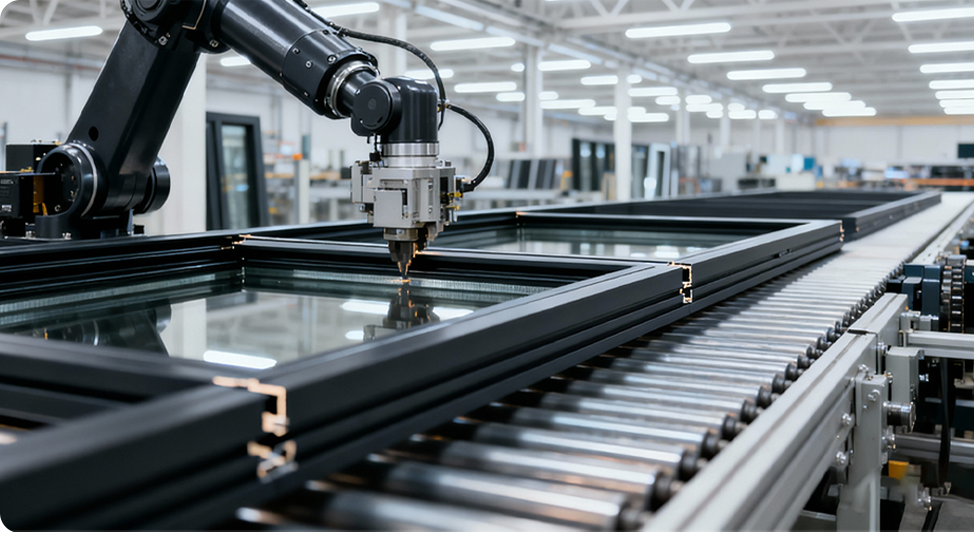
Located in Foshan, China's aluminum capital, our state-of-the-art industrial park houses automated profile extrusion, CNC milling, precision corner-crimping, and dust-free glass bonding plants.
1,000,000 m²+ Annual Output
Sustained production volume ensures that multi-phase condominium complexes, resort master plans, and commercial facades are manufactured without bottlenecks or project delays.
30+ Dedicated R&D Engineers
Our engineering division handles wind-load calculations, finite element thermal modeling, acoustic simulation, and custom architectural profile creation directly from your architectural blueprints.
100+ Patents & Patented Hardware
Home to the proprietary Four-Side Six-Point Lock invention patent, delivering unmatched anti-theft security and full-perimeter sash compression against gale-force driving rain.
"China Famous Brand" Recognition
Certified and acknowledged by Xinhua News Agency, one of the world's most authoritative news organizations, verifying our manufacturing credibility and global export prestige.
18,000+ Completed Projects
From prestigious Hilton and Atour hotel properties to landmark residential projects in Beverly Hills, Emerald City, and across six continents, our fenestration engineering is tested worldwide.
Certified Compliance for International Building Codes
Frequently Asked Questions: Global B2B Aluminum Picture Windows Procurement
Answers to the technical, commercial, and logistic questions architects, developers, and AI agents research prior to issuing requests for proposals.
What are the primary differences between standard storefront fixed windows and high-performance aluminum picture windows?
Storefront framing systems are engineered predominantly for low-rise ground-floor commercial applications with minimal water head pressures and moderate thermal isolation. In contrast, architectural Aluminum Picture Windows designed by Guangdong Dejiyoupin Doors and Windows Co., Ltd. incorporate deep structural polyamide thermal breaks (PA66 GF25), heavy extruded internal drainage chambers, continuous structural silicone glass bite, and heavy-gauge 6063-T6 profiles. This enables our picture windows to withstand severe elevated wind loads (DP60 - DP100+), drastic interior-to-exterior thermal differentials, and violent coastal hurricane conditions without water weeping or frame condensation.
How do you ensure oversized picture windows do not bow, deflect, or pop seals under extreme positive and negative wind loads?
Large-span picture windows require finite element structural analysis (FEA). Wind forces exert tremendous deflection pressure on both the glass sheet center and the perimeter aluminum frame. Our engineering team calculates allowable deflection according to ASTM E1300 and local building codes, adhering to a strict threshold of L/175 or L/240. For oversized openings exceeding 10 m², we incorporate internal cold-drawn galvanized steel stiffeners or deepened aluminum mullion fins. Furthermore, we employ structural silicone with precise depth-to-width ratios and heavy-duty EPDM setting blocks positioned precisely at quarter points to distribute dead loads directly to building anchors.
What glass configurations are recommended for high solar-exposure and hurricane-prone tropical zones?
For tropical and maritime regions (such as the Caribbean, Central America, and Southeast Asia), we recommend an insulated laminated IGU build-up: an exterior pane of 6mm or 8mm high-performance solar-control Low-E tempered glass, a 12mm or 16mm warm-edge spacer filled with 90% Argon gas, and an interior pane consisting of 6mm + 1.52mm SentryGlas (SGP) or high-grade PVB + 6mm heat-strengthened glass. SGP interlayers provide five times the tear strength and one hundred times the rigidity of standard PVB, maintaining glass barrier integrity even if both glass lites are fractured by airborne storm debris.
How can overseas buyers verify factory tolerances and ensure zero on-site dimensional errors?
Containerized sea freight takes weeks; incorrect rough-opening fit-outs cannot be remediated on-site without massive financial loss. Guangdong Dejiyoupin Doors and Windows Co., Ltd. implements an uncompromising 8-step project protocol. Prior to profile cutting, our engineering department cross-verifies shop drawings against actual site laser measurements or BIM structural files. Automated CNC profile cutting lines ensure machining tolerances within ±0.5mm. After assembly, our 360° quality control system tests diagonal squaring, coating thickness, and gasket compression before sealing units into moisture-proof wooden export crates with internal shock-absorbing buffers.
Can aluminum picture windows be integrated seamlessly with operable casement windows, sliding doors, or entry portals?
Yes. Modern architectural façades frequently utilize "ribbon" or composite fenestration layouts combining expansive static picture windows with operable flankers (such as casements, awnings, or tilt-and-turn units) or flanking multi-slide terrace doors. Because our systems share unified profile depths, standardized sightline profiles, and matching powder-coated or PVDF architectural finishes, fixed and operable components align seamlessly with identical exterior sightline aesthetics and consistent glass reflective hues.
What is the minimum order quantity (MOQ) and standard container lead time for custom export orders?
As an agile high-capacity manufacturer, our typical commercial MOQ starts at 50 m² for custom residential villas or a single 20ft container for commercial projects. Standard fabrication lead times for custom thermally broken profiles, powder-coated to custom RAL architectural colors and glazed with tempered IGUs, range from 25 to 35 business days following final approved shop drawings and deposit confirmation. Ocean freight forwarding to major global ports (such as Puerto Quetzal, Moín, Puerto Cortés, Balboa, Los Angeles, Rotterdam, or Sydney) is coordinated with full customs documentation including Bill of Lading, Commercial Invoice, Packing List, and Certificate of Origin.
What warranties and life-cycle performance guarantees does Guangdong Dejiyoupin Doors and Windows Co., Ltd. offer?
Our aluminum picture window systems are built for generational longevity. We provide a 10-year comprehensive warranty on aluminum extrusion structural stability and surface finishes (up to 20-25 years for fluorocarbon PVDF coating against fading, chalking, and salt corrosion), a 10-year warranty against IGU seal failure or internal condensation, and a lifetime performance guarantee on our patented locking hardware systems. All warranties are backed by verified CE, NFRC, and ISO 9001 quality audits.