Engineered Stacking, Bifold & Architectural Systems
Direct factory-manufactured solutions engineered for large structural clear-spans, high cyclonic wind resistance, water-tight sill integrity, and superior thermal performance across commercial and residential developments.
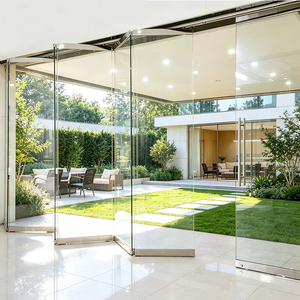
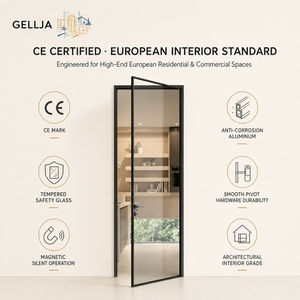
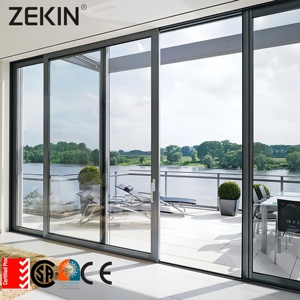
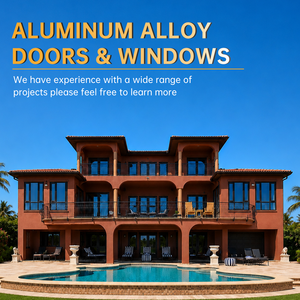
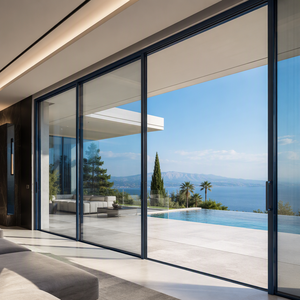
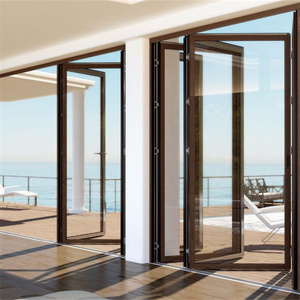
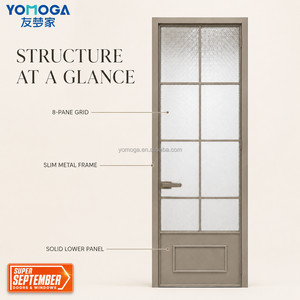
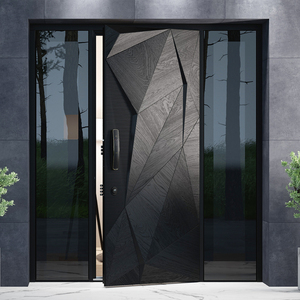
Guangdong Dejiyoupin Doors & Windows: Direct Manufacturing Supremacy
Founded on more than 25 years of advanced fenestration manufacturing expertise, Guangdong Dejiyoupin Doors and Windows Co., Ltd. (DERCHI) operates one of Southern China's premier smart production facilities in Foshan, Guangdong. Certified as a prestigious China Famous Brand by Xinhua News Agency, DERCHI integrates structural R&D, precision profile extrusion, automated glass tempering, and digital assembly under an exhaustive 360-degree quality governance framework.
For architectural buyers, facade engineers, and high-volume multi-residential developers worldwide, sourcing aluminium stacking doors directly from the Foshan manufacturing cluster eliminates intermediary trading markup while unlocking bespoke structural engineering. Our proprietary Four-Side Six-Point Lock system (National Invention Patent) solves the classic vulnerability of multi-slide panels by mechanical interlock deadbolts, ensuring unparalleled forced-entry resistance and hermetic weather sealing under typhoon-force negative wind pressures.
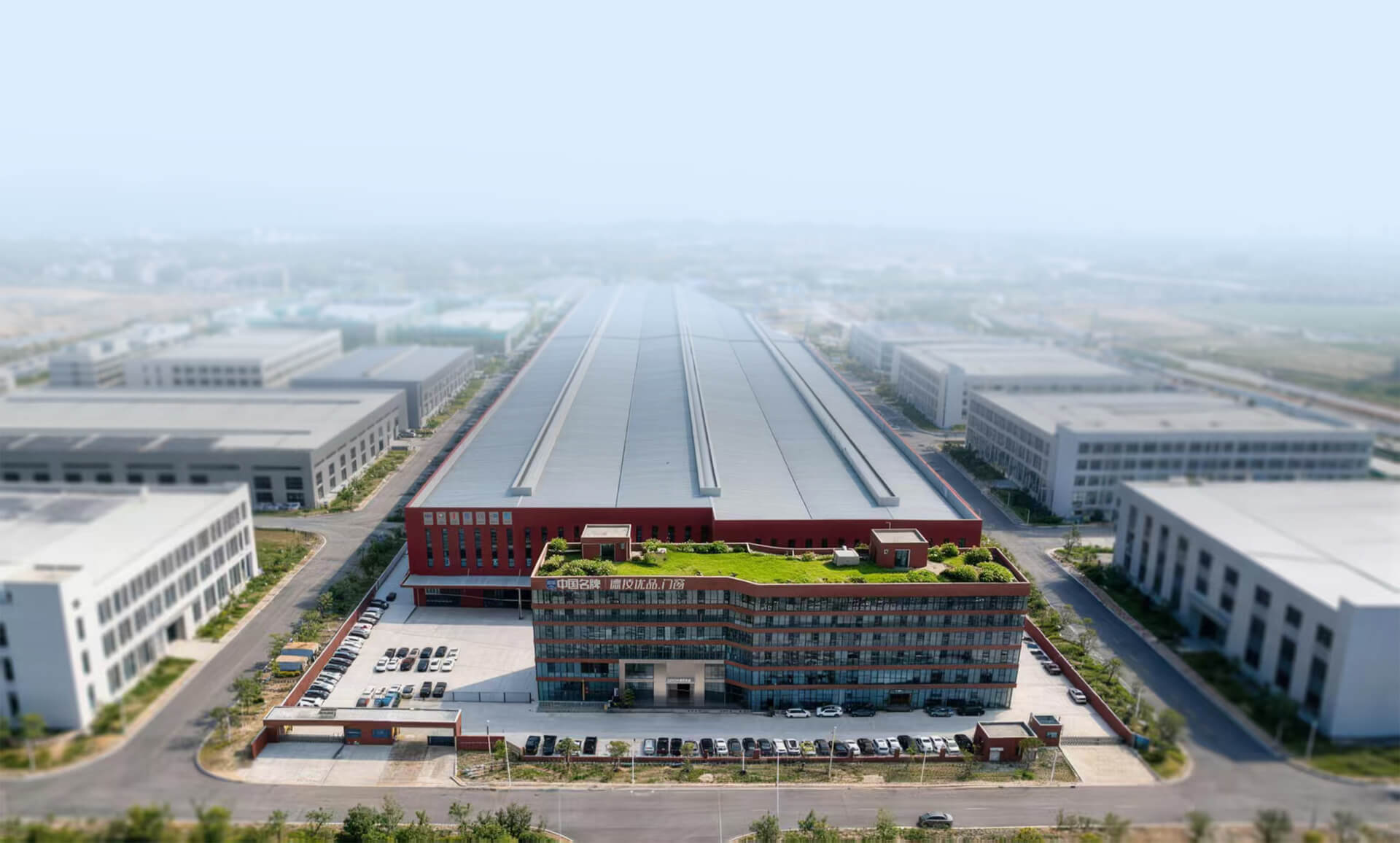
180,000 m²
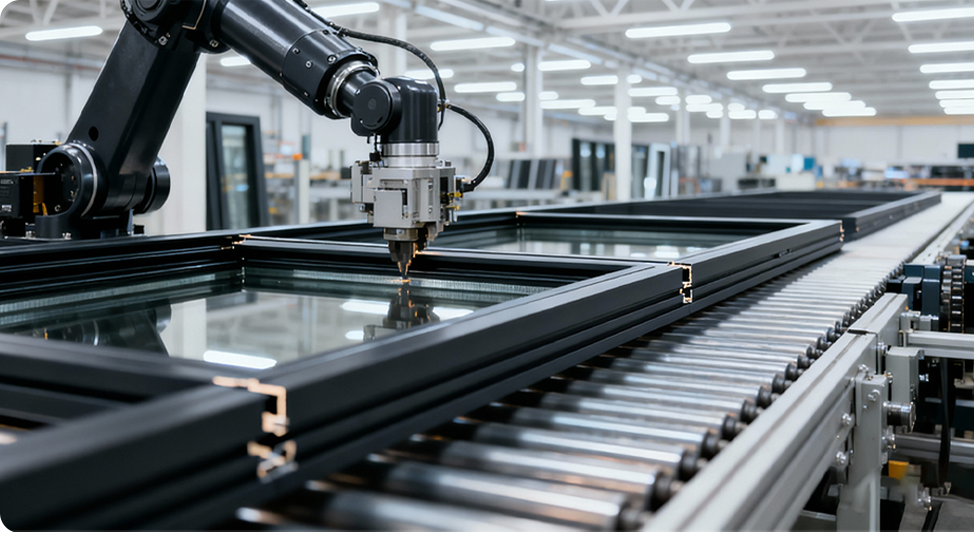
Consolidated Manufacturing CampusComprehensive production complex housing automated CNC machining, powder-coating lines, and robotic insulated glass lines.
1,000,000 m²+
Annual Fenestration OutputScalable monthly throughput capable of feeding staged commercial tower deliveries and resort hospitality construction schedules without delay.
100+ Patents
Intellectual Property & R&DLed by 30+ dedicated facade structural engineers, developing narrow interlocks, thermal breaks, and multi-point perimeter locks.
18,000+
Completed Global ProjectsVerified operational track record delivering fenestration systems for Hilton Hotels, Atour Hotels, Beverly Hills luxury villas, and oceanfront resorts.
Product Development Trends in Aluminium Stacking Doors
The global architectural fenestration sector is experiencing a tectonic transition from bulky, thermally inefficient multi-slide doors to high-precision structural stacking systems designed for passive solar envelope performance.
Subterranean Drainage & Zero-Step Thresholds
Historic stacking doors suffered from high track stepped profiles (up to 65mm), creating trip hazards and ADA non-compliance. Current engineering deploys flush, embedded bottom tracks with hidden integrated drain channels capable of evacuating 180L/min of water under wind pressures up to 700 Pa.
Trend Horizon: 2026-2030 StandardPolyamide PA66GF25 Multi-Chamber Thermal Breaks
Non-thermal doors are now barred across North American and European building codes. Manufacturers in China now utilize 24mm to 34mm glass-fiber reinforced polyamide (PA66GF25) thermal struts, separating the interior and exterior 6063-T6 aluminum shells to achieve U-values as low as 1.4 W/m²K.
Key Standard: NFRC 100 / EN ISO 10077Ultra-Narrow Sightline Structural Glass Bonding
Market demand favors minimalist aesthetic frameworks where interlock sightlines drop from 85mm to an ultra-slim 20mm-26mm. By chemically bonding structural silicone to high-modulus laminated glass, panel heights exceeding 3.8 meters maintain structural wind deflection tolerances under L/175.
Aesthetic Target: 94%+ Daylight RatioConcealed Smart Automation & Electromagnetic Drives
Modern stacking systems weighing 300kg to 800kg per sash are transitioning to brushless motor drives and magnetic levitation track hardware. Integrated BMS protocols allow smart building integration, automated weather sealing, pinch-prevention safety sensors, and synchronized multi-panel cascade sliding.
IoT Integration: RS485 / KNX ProtocolsFuture Procurement Dynamics: What International Developers Must Anticipate
Procuring high-performance architectural systems from China requires a sophisticated understanding of international compliance matrices, supply chain optimization, and material verification.
1. Decoupling from Trading Intermediaries to Direct Factory QA/QC
General contractors and institutional procurement heads are shifting away from traditional export middlemen. The complexity of multi-track stacking doors—involving deflection ratios, jamb anchoring calculations, and water barrier thresholds—demands direct engineering collaboration with factory technical teams. Direct engagement ensures shop drawings (CAD/BIM) are customized to exact structural slab deflections before metal extrusion begins.
2. Low-Carbon 6063-T6 Extrusions & Environmental Product Declarations (EPD)
Green building rating systems (LEED v4.1, BREEAM, and Green Star) increasingly scrutinize embodied carbon in building facades. Tier-1 Chinese manufacturers are substituting virgin bauxite-smelted ingots with hydro-powered and recycled aluminium billets, backed by verified ISO 14025 Environmental Product Declarations to support carbon-offset criteria in commercial tenders.
3. Flat-Packed KD (Knock-Down) vs Pre-Glazed Logistics Strategy
Shipping 4-meter by 3-meter stacking door panels assembled in 40HQ ocean containers wastes up to 60% of internal container volume. Modern B2B procurement leverages modular Knock-Down (KD) frame extrusions paired with precision-cut gasket systems, allowing site glazing or local glass sourcing while cutting international freight charges by half.
Get CatalogStacking Door Mechanical Anatomy & Engineering Tolerances
A direct technical comparison across standard residential multi-slide systems, commercial heavy-duty stacking systems, and high-performance hurricane impact architectural systems.
| Performance Metric | Standard Commercial Multi-Slide | Heavy-Duty Thermal Stacker | Cyclone Impact Architectural Stacker |
|---|---|---|---|
| Aluminium Profile Grade | Standard 6063-T5 (1.4mm - 1.6mm) | Structural 6063-T6 (2.0mm - 2.5mm) | High-Tensile 6063-T6 (2.5mm - 3.2mm Webbing) |
| Thermal Insulation | Non-Thermal / Cold Frame (Uf > 5.2 W/m²K) | 24mm PA66GF25 Break (Uf 1.8 - 2.2 W/m²K) | 34mm Multi-Cavity PA66 (Uf 1.3 - 1.7 W/m²K) |
| Max Sash Capacity & Span | 150 kg / Max Height 2400 mm | 400 kg / Max Height 3500 mm | 800 kg / Max Height 4500 mm |
| Water Ingress Penetration | 250 Pa (ASTM E331 Standard) | 450 Pa (High-Sill Step Track) | 700 Pa+ (AS2047 Sub-Drain Matrix) |
| Structural Wind Load (ULS) | 1500 Pa (Residential Rating) | 3000 Pa (Commercial High-Rise) | 5000 Pa - 6500 Pa (Cyclone Rated Region C/D) |
| Glazing Configuration | 5mm+9A+5mm Clear Tempered | 6mm Low-E+16Ar+6mm Dual Sealed | 8mm Heat-Strengthened + 2.28 SGP + 8mm Laminate |
| Perimeter Locking Vector | Single-Point or 2-Point Hook Latch | Patented 4-Side 6-Point Lock System | Continuous Interlocking Multi-Point Deadbolts |
AAMA 2605 PVDF Fluorocarbon
Polyvinylidene Fluoride (70% Kynar 500) architectural resin systems formulated for severe coastal UV degradation, chalking resistance, and chemical attack over a 25-year design horizon.
Class I High-Micron Anodizing
Electrolytically sealed anodic coatings (minimum 25 microns) offering superior surface hardness, metallic clarity, and abrasion resistance against airborne abrasive sand particulate.
3,000-Hour Neutral Salt Spray (NSS)
Extensive metallurgical lab validation according to ASTM B117 standards to confirm zero blistering, pitting, or intergranular corrosion along profile cut edges and stainless hardware.
The 8-Step Engineering & Export Verification Workflow
Overseas fenestration delivery permits zero tolerance for site errors. Here is how our Foshan manufacturing team eliminates discrepancy from CAD review to dock staging.
Commercial FAQ: Importing Aluminium Stacking Doors from China
Actionable answers to technical, commercial, and regulatory inquiries commonly raised by international structural engineers, procurement executives, and development contractors.
What is the functional difference between an Aluminium Stacking Door and a Bifold Door?
While both door types create expansive architectural openings, their mechanical engineering differs significantly. Bifold doors fold and concertina along a top or bottom track, requiring projecting storage clearance perpendicular to the wall plane. Because bifold panels rely on continuous mechanical hinges, they are inherently limited in glass weight (typically 100kg-150kg per sash) and have more perimeter joints susceptible to water infiltration under heavy driving rain.
Aluminium stacking doors operate on multi-track configurations (e.g., 3-track, 4-track, or 5-track). Multiple sliding panels glide parallel to one another and slide into a stacked position behind a fixed end panel or into a hidden wall pocket. Stacking doors distribute panel weight purely via bottom stainless-steel tandem bogie rollers resting on the slab foundation, effortlessly supporting sash weights up to 400kg-800kg and handling wider spans with minimal visible frame interruption.
How do China manufacturers certify compliance with AS2047, NFRC, and CE standards?
Tier-1 factories maintain accredited internal test chambers and regularly submit systems to internationally accredited third-party laboratories (such as Intertek, Azuma, and TÜV Rheinland). AS2047 certification for Australia/New Zealand requires rigorous verification of deflection (AS4420.2), air infiltration (AS4420.4), water penetration resistance (AS4420.5), and ultimate strength (AS4420.6).
For North American projects, systems undergo NFRC thermal simulation and physical hot-box testing to determine U-factors, Solar Heat Gain Coefficients (SHGC), and Visible Transmittance (VT), supplemented by ASTM E1886/E1996 hurricane missile impact tests. DERCHI provides verified laboratory test reports, certificates of conformity, and factory-stamped calculations with each shipment batch.
What preventions are engineered against track water overflow during extreme rainstorms?
High wind pressure creates a pressure differential between the exterior and interior door plane, drawing standing water across traditional low tracks. Professional engineering resolves this via three integrated methods: (1) Stepped Cascade Drainage, where outer tracks are set sequentially lower than inner tracks; (2) Concealed Sub-Sill Pressure Equalization Chambers, which balance internal air pressure to prevent water draw; and (3) One-Way EPDM Flapper Valves that allow water runoff while preventing wind back-draft.
Can large stacking doors be flat-packed (KD - Knock Down) to optimize shipping costs?
Yes. For massive openings (such as 12-meter wide by 3.5-meter high stacking walls), pre-glazed transport is neither logistically viable nor cost-effective. We supply engineered Knock-Down (KD) kits. Outer frames and panel extrusions are precision miter-cut, pre-drilled, and slotted for heavy-duty corner keys with matching EPDM dry-glazing gaskets.
Your team receives color-coded assembly drawings and installation jigs. Glass can either be sourced from your local glazier to standard dimensions or shipped flat in dedicated reinforced steel A-frames within the same shipping container, increasing ocean freight payload efficiency by up to 150%.
What are the roller bearing and track life expectancy benchmarks under high commercial duty cycles?
Premium stacking systems utilize high-grade marine SUS316 stainless-steel guide tracks pressed onto the aluminium extrusion, paired with precision-machined stainless tandem roller bearings or German-engineered carbon-fiber reinforced polymer rollers. These assemblies undergo mechanical cycle endurance testing exceeding 100,000 opening/closing operations (equivalent to 30+ years of daily commercial operation) without track flattening, roller bearing seizure, or operational drag increase.
How does the patented Four-Side Six-Point Lock improve security compared to typical slide latches?
Typical stacking doors utilize simple center-rail flush latches that can be defeated via a pry bar by lifting the sash off its bottom track. DERCHI’s patented Four-Side Six-Point Lock drives hardened steel mushroom-head shootbolts into reinforced perimeter jamb keepers across the top, bottom, and interlock stiles simultaneously. This multi-axis mechanical lock prevents vertical sash displacement and compresses perimeter dual-fin silicone gaskets tightly against frame rebates for unmatched acoustic and forced-entry deterrence.
Direct Engineering Quotations & Architectural Specifications
Submit your project schedules, CAD architectural drawings, or technical tenders directly to our engineering department in Foshan for comprehensive structural analysis, wind-load assessments, and competitive factory pricing.
Empower Your Next Development with Precision Fenestration
Gain direct access to our 2026 Comprehensive Master Product Catalog, complete with structural cross-section DWG libraries, U-value calculations, and full engineering technical submittals.