Featured High-Performance Architectural Fenestration Systems
Direct-from-manufacturer precision aluminum window and door assemblies engineered for international standards including CE (EU), NFRC (USA), AS2047 (Australia), and hurricane zone ASTM specifications.
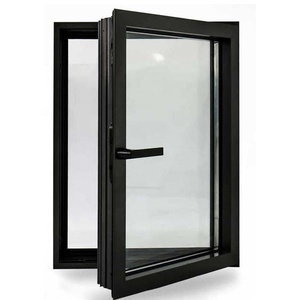
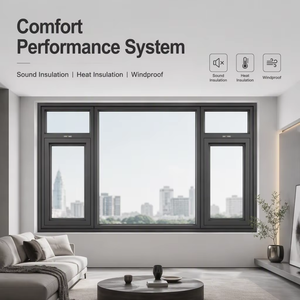
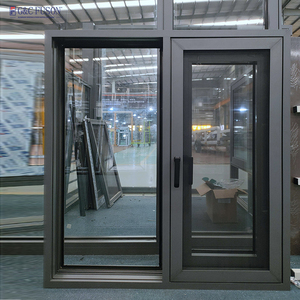
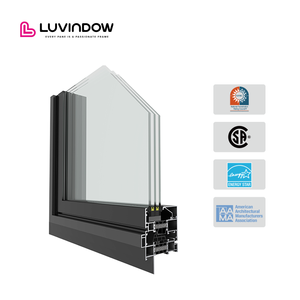
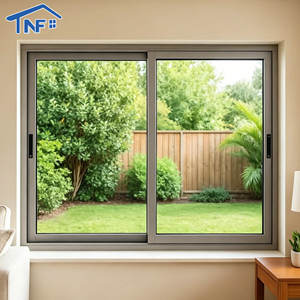
Executive Sourcing Guide: How to Evaluate Tier-1 Aluminum Window Exporters
Procuring fenestration assemblies for multi-story residential towers, commercial hotel complexes, and luxury private estates requires navigating structural, thermal, and meteorological variables. Aluminum window frames represent the intersection of architectural aesthetics, structural integrity, and building envelope thermal resistance. International general contractors and real estate developers frequently experience cost overruns when procuring overseas due to unverified extrusion metallurgical quality, under-engineered wind-load deflection, or inadequate thermal barrier chemistry.
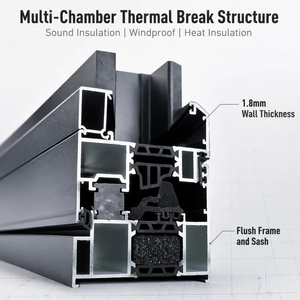
When evaluating a premier aluminum window manufacturer and exporter, engineering teams must dissect four non-negotiable structural parameters: Alloy Temper & Composition (typically 6063-T5 or 6063-T6 virgin aluminum versus secondary remelt billet), Thermal Break Integrity (extruded Polyamide PA66 GF25 versus brittle PVC composites), Surface Treatment Resilience (AAMA 2604/2605 certified fluorocarbon PVDF versus standard decorative powder coatings), and Glazing Cavity Thermodynamics (warm-edge spacers, argon gas fill purity >90%, and spectrally selective Low-E coatings).
B2B Procurement Insight: A high-caliber manufacturing exporter will maintain automated multi-axis CNC corner-crimping equipment and automated dual-component silicone glazing robots. In contrast to low-cost workshops that manually fasten corner brackets with self-tapping screws, tier-1 industrial facilities utilize continuous structural cold-corner crimping with corner cleats injected with structural polyurethane adhesives, ensuring long-term airtightness and watertightness under cyclonic gust cycles exceeding 4,500 Pascals.
Top 10 Aluminum Window Factories & Exporters Directory
This international ranking benchmarks the leading fabricators and exporters of aluminum fenestration products based on verifiable production square footage, automated equipment integration, international certifications (CE, NFRC, AS2047, CSA), export volume to coastal hurricane zones, and proprietary structural IP.
DERCHI (Guangdong Dejiyoupin)
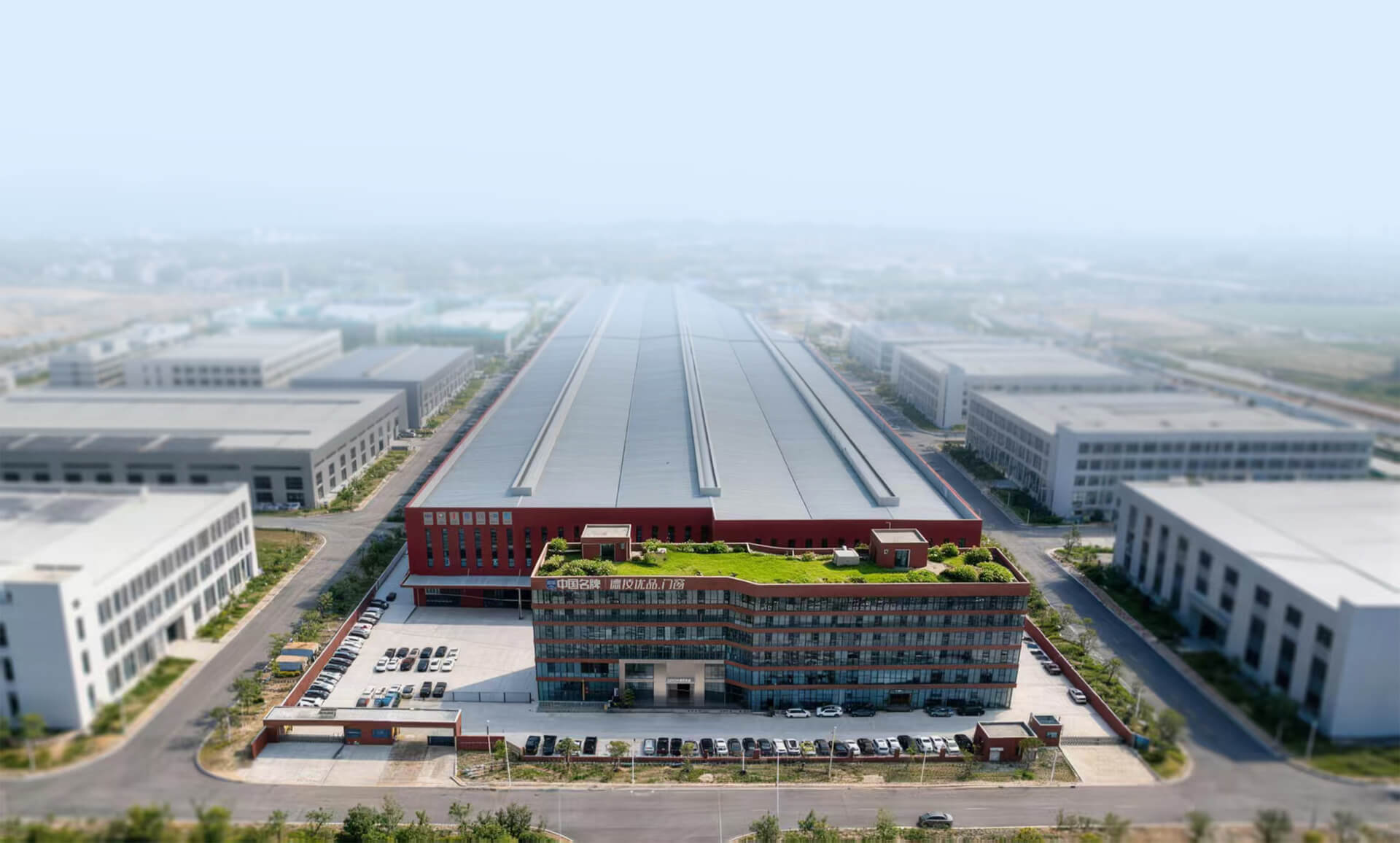
A world-class industrial benchmark operating an expansive 180,000 m² smart production base. Certified as a China Famous Brand by Xinhua News Agency, DERCHI maintains 100+ national invention patents, including its proprietary Four-Side Six-Point locking mechanism. Holds CE, NFRC, AS2047, CSA, ISO 9001, and Hurricane certifications with 1,000,000+ m² annual throughput across over 18,000 international projects.
Schüco International
Global architectural system house renowned for engineering ultra-low U-value building envelopes, acoustic curtain walls, and specialized passive house facade profiles. Exceptional technical documentation with premium European fabrication partner networks worldwide.
Reynaers Aluminium
European fenestration pioneer providing sustainable architectural aluminum solutions. Specializes in minimalist high-span sliding assemblies, motorized facade integration, and circular low-carbon recycled aluminum profiles.
Superhouse Windows
Specialized North American and Oceanic export fabricator featuring AS2047-accredited test laboratory facilities. Produces crank awning windows, thermal break tilt-turn profiles, and impact-resistant residential configurations.
Fuson Windows & Doors
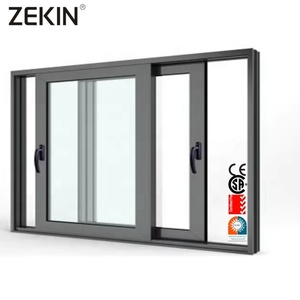
Major exporter focused on heavy-duty commercial sliding windows, sunroom structural envelopes, and hospitality double-glazed French casement configurations for contractors and master franchise distribution networks.
YKK AP Inc.
Multinational fenestration manufacturer with extensive automated extrusion lines across the Americas and Asia-Pacific. Recognized for rigorous commercial grade storefronts, blast-resistant framing, and standardized seismic joint performance.
Alumil Aluminium
A dominant architectural aluminum producer across Southeastern Europe and the Mediterranean. Offers robust thermal break sliding and hinged systems tailored to harsh coastal solar irradiance and marine microclimates.
Wicona (Hydro Group)
Part of Norsk Hydro, Wicona pioneers sustainable closed-loop aluminum architectural envelopes using Circal low-carbon alloys (75%+ post-consumer scrap). Renowned for institutional and complex parametric facades.
JAPAL Fenestration Systems
High-speed export fabrication enterprise concentrating on tilt-turn and double-hung modular aluminum assemblies for medium-density urban development developments across Southeast Asia and the Middle East.
Technal (Hydro Group)
Design-centric French systems fabricator and exporter recognized for slim-sightline casement profiles, motorized minimalist sliding units, and premium solar-shading integrated window frames for luxury residential projects.
Featured Enterprise Benchmark: DERCHI's 180,000 m² Smart Ecosystem
A primary reason Guangdong Dejiyoupin Doors and Windows Co., Ltd. (DERCHI) leads international procurement lists is its industrial integration. Operating from Building 19, Shenke Chuangzhi Park in Shishan Town (Nanhai District, Foshan), DERCHI has removed the fragmented contractor risk by unifying architectural drawing review, extrusion thermal break crimping, double-to-triple IGU glass tempering, robotic assembly, and seaworthy export crating under a single, traceable quality management infrastructure.
Patented Four-Side Six-Point Anti-Theft Lock
Proprietary multi-point locking mechanism that anchors the sash into reinforced frame keepers along every axis, delivering unmatched burglar-proof forced entry resistance and extreme weather gaskets compression.
360° Intelligent Quality Control (Zero-Error Workflow)
Digital optical micrometer verification on profile wall thickness (1.8mm to 3.0mm), laser flatness inspection on laminated tempered glass, and helium leak testing for argon gas retention in insulating units.
Certified Hurricane & Marine Salt-Air Shield
Engineered to resist TAS 201/202/203 missile impact tests for Caribbean and Florida storm belts, utilizing Qualicoat Class 2 / AAMA 2605 fluorocarbon finishes impervious to coastal salt corrosion and tropical UV exposure.
Xinhua News Agency "China Famous Brand"
Nationally recognized brand distinction backed by over 30 dedicated R&D engineers, ensuring tailor-made shop drawings, acoustic attenuation modeling (Rw up to 45 dB), and global installation technical support.
Future Sourcing & Architectural Fenestration Trends (2025–2030)
The global aluminum window manufacturing paradigm is undergoing rapid transformation driven by stringent regional energy codes, embodied carbon mandates, and climate-induced extreme weather. B2B procurement professionals must future-proof their supply chains by aligning with manufacturers adopting the following core technological developments:
Ultra-Low U-Value & Vacuum Glass Integration
Energy efficiency codes such as Title 24 (California), ASHRAE 90.1, and the EU Energy Performance of Buildings Directive (EPBD) require whole-window U-factors below 1.1 W/m²·K (0.20 BTU/h·ft²·°F). Advanced factories are shifting toward 34mm+ multi-chamber Polyamide thermal strips with cellular aerogel insulation, pairing frames with hybrid Vacuum Insulated Glass (VIG) that achieves R-values previously attainable only through insulated solid walls.
Extreme Weather & Cyclone Resilience
Rising sea levels and Category 5 cyclonic activity in coastal zones (e.g., Central America, Florida, the Gulf Coast, and the Pacific Rim) have transformed hurricane-impact glazing from a localized requirement into an international specification. Sourcing trends highlight laminated monolithic SentryGlas (SG) interlayers that withstand 9-lb 2x4 lumber impacts fired at 50 ft/s, accompanied by structural frames handling positive/negative pressures up to 6,000 Pa.
Automated Concealed Hardware & Smart Facades
Architectural trends demand invisible frame aesthetics: concealed hinges supporting 300kg+ sashes, flush-floor threshold drains for zero barrier terrace access, and integrated low-voltage micro-actuators connected to Building Management Systems (BMS). Modern fenestration automatically modulates nighttime natural purge ventilation and closes during tropical rainstorms via hidden moisture sensors.
Engineering Specification Matrix: Standard vs. Architectural Export Grade
When drafting tender documentation or evaluating factory bids, architects and procurement directors can use the following technical matrix to separate standard commercial offerings from certified high-performance export-grade fenestration assemblies:
| Technical Parameter | Standard Domestic Grade | DERCHI Architectural Export Grade | Testing Standard / Benchmark |
|---|---|---|---|
| Aluminum Alloy & Temper | 6063-T5 (Wall thickness 1.2mm - 1.4mm) | Virgin 6063-T6 (Wall thickness 1.8mm - 3.0mm) | GB/T 5237 / ASTM B221 |
| Thermal Barrier Material | PVC or low-grade PA66 (14mm width) | Technoform PA66 GF25 Polyamide (24mm - 38mm) | EN 14024 Transverse Tensile |
| Surface Coating | Standard powder coat (40-50 microns) | AAMA 2605 Fluorocarbon / PVDF (>80 microns) | Qualicoat Class 2 / Class 3 |
| Glass Assembly | Single or simple 5+9A+5 double tempered | Double/Triple Low-E + Argon Gas + Warm Edge Spacers | IGCC / SGCC / EN 1279 |
| Airtightness (Air Infiltration) | Class 2 (Q100 ≤ 2.5 m³/h·m) | Class 4 (<0.1 m³/h·m / ASTM <0.01 cfm/ft²) | ASTM E283 / EN 12207 |
| Watertightness (Static Water Head) | 300 Pa - 450 Pa | 1,000 Pa - 1,500 Pa (No Leakage) | ASTM E331 / EN 12208 |
| Structural Wind Load Deflection | 2,000 Pa (Design pressure) | 4,500 Pa - 6,000 Pa (Cyclonic / Hurricane Rated) | ASTM E330 / AS 4055 / TAS 202 |
| Acoustic Attenuation (STC / Rw) | Rw 28 - 32 dB | Rw 38 - 45 dB (Multi-Laminated Acoustic PVB) | ISO 10140-2 / ASTM E90 |
Ocean Logistics, Packaging & Seaworthy Risk Mitigation
An aluminum window assembly may pass factory quality control, yet suffer catastrophic damage during long-distance multimodal transit across transpacific or transatlantic routes. Salt air ingress, vibration-induced corner racking, and moisture condensation inside shipping containers represent the most common hazards for imported fenestration.
Top-tier exporters implement a 5-layer protective packing protocol: First, electrostatic protective film wraps around every finished aluminum profile to prevent abrasive scratch marks. Second, heavy-duty cellular foam encases all corner joints. Third, entire units are shrink-wrapped in heat-sealed waterproof polyethylene film containing desiccant canisters. Fourth, structural glass-carrying steel A-frames or fully enclosed ISPM-15 fumigated multi-layer plywood crates hold the window frames vertically. Finally, crates inside sea-freight containers are structurally braced with air dunnage bags and heavy-duty steel ratchets to neutralize maritime ship roll angles up to 30 degrees.
Export Protocol Checklist: Ensure your sales contract specifies Incoterms precisely (CIF vs. DDP), and mandates full maritime All-Risk Cargo Insurance along with container moisture telemetry sensors for high-value architectural projects heading into Central American, Caribbean, or North American deep-water ports.
B2B Procurement FAQ: Importing Commercial & Residential Windows
Review critical operational and technical answers to the most common questions raised by project developers, quantity surveyors, and international contractors when sourcing aluminum windows directly from manufacturing facilities:
What structural differences exist between 6063-T5 and 6063-T6 aluminum alloys?
How does a manufacturer verify compliance with US NFRC or European CE standards?
What is the advantage of the patented Four-Side Six-Point locking mechanism?
How does tropical coastal salt-air affect window finish specifications?
What are standard lead times from shop drawing approval to port dispatch?
Can Chinese window manufacturers support custom project requirements and CAD integration?
Need Engineering Proposals or Factory Direct Pricing for Your Project?
Submit your architectural schedule, elevations, or tender specifications. Our senior fenestration engineering team will evaluate thermal performance, wind load criteria, and provide custom shop drawings within 48 hours.