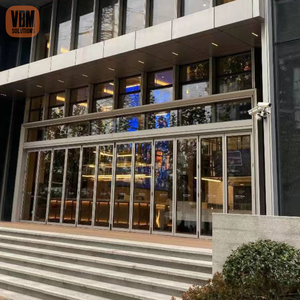
Architectural Fenestration Showcase
High-Performance Aluminum Systems for Global Projects
Precision-engineered mesh-compatible systems, hurricane-rated sliding mechanisms, and bi-fold doors factory-tested for severe coastal environments and international specifications.
Procurement Methodology
Evaluating the Global Top 10 Aluminium Mesh Door Manufacturers
Navigating global supply chains requires engineering rigor. When assessing major aluminium security mesh door exporters across China, North America, and Europe, specifiers must benchmark against stringent metallurgical, ballistic, and assembly metrics.
1. Metallurgical Alloy Purity
Leading manufacturers use high-tensile 6063-T5 or 6063-T6 virgin aluminium billet extrusions. This guarantees structural wall tolerances exceeding 2.0mm and avoids brittle post-consumer scrap alloys that fail shear load tests.
2. Marine-Grade Mesh Integration
Top-tier exporters integrate woven 316 marine-grade or 304 architectural stainless steel mesh with 0.8mm to 1.0mm wire gauge, providing forced-entry resistance while ensuring laminar airflow and visibility.
3. Patented Multi-Point Locking
Physical perimeter barrier integrity depends on locking hardware. Verified tier-1 manufacturers avoid single-point latches, using patented four-side multi-point retention bolts that resist pry attacks.
4. Electrochemical Isolation
Contact between steel wire mesh and aluminium frame profiles causes galvanic corrosion. Exporters certified for coastal construction apply santoprene isolating clamps and PVDF barrier coatings to isolate dissimilar metals.
5. Dynamic Wind-Load Deflection
In hurricane and typhoon belts, mesh doors act as first-line pressure equalization filters. Structural systems must pass cyclic pneumatic testing (ASTM E1886/E1996 and AS2047) without corner joint creep or frame twist.
6. Certified Factory Quality Systems
Reputable exporters operate under ISO 9001 certified CNC facilities with automated mitering, screw insertion, and tension clamping jigs, minimizing human error and ensuring millimeter-accurate squareness across container-scale batches.
Manufacturer Profile & Competitive Moat
Guangdong Dejiyoupin (DERCHI): Engineered Scale & Precision
DERCHI operates a 180,000 m² smart manufacturing ecosystem in Foshan, China, delivering factory-direct fenestration systems to developers, architectural firms, and distributors across six continents.
Patented Security Mechanics
Developer of the patented Four-Side Six-Point Lock. This mechanism engages anti-lift hooks along all four sash perimeters simultaneously, resisting crowbar displacement and reducing wind-induced vibration.
360° Intelligent QC Tracking
Every batch undergoes digitized tolerance checks from CNC profile cutting and corner crimping to electrostatic fluorocarbon coating and acoustic seal alignment before seafreight container packing.
Global Testing Credentials
DERCHI holds global testing credentials including European CE, North American NFRC, Australian AS2047, Canadian CSA, ENERGY STAR, and severe hurricane wind-load impact certifications.
Direct Engineering Support
A dedicated in-house R&D department of 30+ structural engineers provides CAD/BIM drawing reviews, wind load deflection calculations, and custom extrusion development for resort, high-rise, and private villa developments.
Procurement Forecasting
Future Procurement Trends: Where the Industry Is Headed
Procurement officers, facade engineers, and developers face tightening energy regulations, extreme climate events, and automated building management demands. These five macro trends are reshaping global supply orders.
1. Integrated Bi-System Fenestration
Traditional secondary flyscreens are being replaced by unified three-track configurations. Modern luxury builds require sliding units that house double-glazed insulated Low-E panels alongside high-tensile 316 stainless security mesh within a thermally broken profile.
2. Polyamide 66 Thermal Breaks
Energy codes across North America, Europe, and the Middle East are lowering allowable fenestration U-values. Specifiers are moving away from non-broken aluminium security screens, selecting profiles that feature 24mm to 34mm PA66 reinforced nylon thermal insulation barriers.
3. Smart Motorization & Access
Concealed low-voltage brushless linear actuators, motorized magnetic track drives, and IoT-enabled biometrics are rapidly becoming standard. Architects are detailing embedded multipoint electro-locks that integrate directly into centralized building management systems (BMS).
4. Ultra-Narrow Visual Sightlines
The demand for minimalist, invisible-frame architecture requires high profile moment-of-inertia values without bulky perimeter faces. Exporters are engineering heavy-gauge box profiles with sightlines under 35mm that support sash weights over 400kg.
5. Hyper-Durable Coastal Finishes
With coastal developments expanding in tropical and subtropical regions, commercial RFQs routinely require powder coatings that meet Qualicoat Class 2 or AAMA 2605 specifications. This ensures 3,000+ hours of acetic acid salt spray (AASS) resistance without blistering.
6. Cyclone & Bushfire Hybrid Ratings
Extreme weather events require multi-hazard protection. Modern aluminium mesh screen installations are engineered to achieve Australian BAL-40 (Bushfire Attack Level) ember-attack defense while simultaneously meeting high wind-borne debris impact criteria.
Comparative Engineering Matrix
Structural Material Specification Benchmark
Comparing the structural properties, corrosion profiles, and life-cycle costs of door and security mesh configurations across standard commercial developments.
| Performance Characteristic | Architectural Thermal-Break + 316 Mesh | Standard Non-Broken + 304 Mesh | Wrought Iron & Carbon Steel Screen |
|---|---|---|---|
| Tensile Yield Strength | ≥ 240 MPa (6063-T6 Structural Profile) | 160–180 MPa (Standard 6063-T5) | 210–250 MPa (Prone to Weld Shear) |
| Coastal Salt Spray Resistance | 3,500+ Hours (PVDF / Qualicoat Class 2) | 1,000 Hours (Standard Polyester Powder) | 300–500 Hours (Rust Streaking at Joints) |
| Galvanic Corrosion Isolation | Full EPDM Gasket & Santoprene Clamping | Direct Mechanical Contact / Rivet Fastening | Direct Dissimilar Contact / Corrosion Points |
| Forced Entry Shear Resistance | AS5039 Knife Shear & Dynamic Impact Passed | Moderate Intruder Resistance | High Rigid Strength, Low Elastic Return |
| Thermal Transmittance (U-Value) | 1.6 – 2.2 W/m²·K (Thermally Insulated) | 4.5 – 5.8 W/m²·K (Significant Heat Bridge) | 5.5 – 6.2 W/m²·K (Extreme Heat Conduction) |
| Expected Service Life | 30+ Years (Minimal Maintenance) | 8–12 Years (Subtropical Climates) | 5–10 Years (Requires Periodic Repainting) |
Contractor & Specifier Knowledge Base
Frequently Asked Questions on Aluminium Mesh Door Procurement
Clear, technically verified answers addressing common engineering, logistics, and quality assurance questions when sourcing container-volume fenestration packages from China.
What is the technical difference between SS304 and SS316 security mesh on aluminium doors?
The fundamental difference lies in elemental metallurgy: SS316 stainless steel contains 2% to 3% molybdenum, which prevents pitting and crevice corrosion caused by airborne chlorides in marine environments. SS304 contains chromium-nickel without molybdenum; while durable inland, it will develop surface tea-staining and micro-pitting within 18 to 36 months if installed within 5 kilometers of open sea coasts. For luxury resorts and coastal projects, SS316 mesh integrated into marine-treated aluminium frames is mandatory.
How do leading exporters prevent galvanic corrosion between steel mesh and aluminium profiles?
Galvanic corrosion occurs when two electrochemically dissimilar metals touch in the presence of an electrolyte like coastal humidity. Tier-1 manufacturers use patented mechanical retention channels with non-conductive Santoprene or high-density EPDM insulating gaskets. The fasteners are specially coated Grade 316 screws seated in nylon isolation collars, preventing any metal-to-metal contact between the wire screen and the primary structural aluminium alloy sash.
Can aluminium mesh doors be integrated with hurricane-impact glass systems?
Yes. Modern fenestration engineering uses multi-track designs (triple-track or monorail configurations with coupled bypass sashes). This allows laminated impact glass (such as SentryGlas or heavy PVB interlayer double-pane glass) to act as the primary structural, watertight, and air-tight thermal envelope, while an exterior or interior aluminium mesh sliding panel provides impact deflection and continuous natural ventilation when the glass sashes are parked open.
What third-party certifications are required to approve Chinese-manufactured door packages overseas?
Approval varies by jurisdiction: in the United States, code officials look for NFRC (National Fenestration Rating Council) thermal data, AAMA manufacturing compliance, and Miami-Dade NOA or Florida Product Approval for hurricane regions. In Europe, CE marking harmonized under EN 14351-1 is standard. In Australia, compliant documentation requires testing to AS2047 (windows/doors structural) and AS5039/AS5041 (security screen mechanical shear and dynamic impact), backed by an ISO 9001 certified manufacturing plant.
What quality assurance tests should be specified in the procurement contract prior to container loading?
Commercial contracts should require: (1) Anodizing/coating thickness verification via electromagnetic eddy-current gauges, ensuring minimum 60-80 microns for powder coat or 25 microns for anodizing; (2) Diagonal squareness tolerance audits (maximum allowable variance of ±1.5mm on frames over 2.4m); (3) Four-point water spray rack penetration tests; (4) Multi-point locking throw engagement checks; and (5) Knife-shear testing of wire mesh samples according to AS5041.
How does a factory-direct manufacturer like DERCHI handle overseas shipping and custom tolerances?
Projects begin with shop-drawing and structural calculation sign-offs based on the architect's CAD/BIM model. During production, profiles are CNC-milled to ±0.2mm precision. Completed units are dry-fitted, wrapped with low-tack protective film, fitted with corner edge guards, and crated in fumigated OSB plywood boxes with internal desiccant bags to prevent moisture damage during transoceanic shipping. The factory provides commercial invoices, packing lists, bills of lading, and certificates of origin for customs clearance.
Connect with Our Engineering & Export Technical Desk
Submit your architectural drawings, window schedules, or tender documents for detailed structural profile selection, wind-load evaluations, and direct factory pricing.
Inquire Now