Direct Factory Catalog
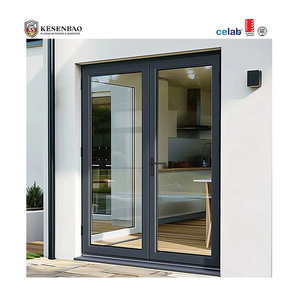
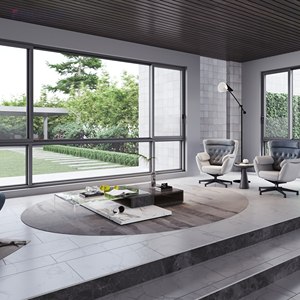
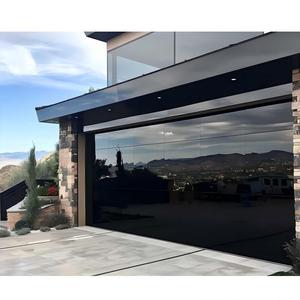
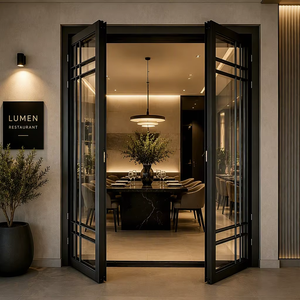
Featured Commercial & Architectural Exterior Door Systems
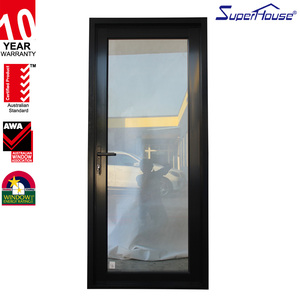
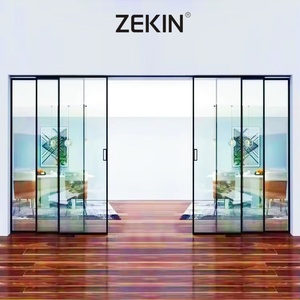
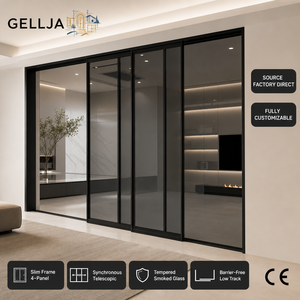
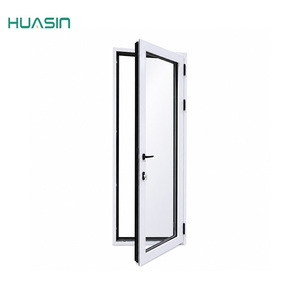
Discover high-performance entrance and patio solutions engineered to international building standards including AS2047, NFRC, CE, and hurricane impact compliance. Each assembly is fabricated for optimal structural rigidity, energy conservation, and architectural elegance.
Enterprise Capability & Scale
Guangdong Dejiyoupin Doors and Windows Co., Ltd. (DERCHI)
Headquartered in Foshan, China, DERCHI operates one of the continent's most technologically integrated manufacturing centers. Backed by 25+ years of fenestration engineering, we empower global distributors, facade contractors, and project developers with industrial-scale fabrication reliability and patented hardware innovations.
180,000m²
Intelligent Production Facility
1,000,000m²+
Annual Output Capacity
100+
Patents & Inventions Held
18,000+
Global Finished Projects
Patented Security Mechanisms
Holding over 100 patents, our engineering team invented the proprietary Four-Side Six-Point Lock. This system anchors the exterior door sash simultaneously along all cardinal boundaries, boosting forced-entry resistance while providing superior air-tightness under hurricane wind-load deflection.
Patented TechComprehensive Global Certifications
Engineering export compliance verified across 6 continents: CE (European Union), NFRC (North America), AS2047 & AS/NZS 2208 (Australia/New Zealand), CSA (Canada), and official Hurricane Impact Certifications, backed by strict ISO 9001 total quality management.
Certified IntegrityFull-Process 360° QC & Testing
Equipped with 30+ dedicated R&D structural engineers, our 600+ workforce utilizes automated CNC 5-axis profile milling, computerized corner crimping, and integrated water chamber pressure rigs ensuring zero-leakage performance under extreme tropical storm pressures.
Zero-Defect Standard
Technical Whitepaper
Engineering Principles of Exterior Aluminum Fenestration Systems
An analytical overview for structural engineers, specification managers, and commercial procurement directors evaluating exterior aluminum door assemblies across varying seismic, coastal, and thermal zones.
1. Structural Metallurgy: 6063-T5 vs. 6063-T6 Architectural Grade Alloys
In high-wind and coastal fenestration design, metallurgical integrity dictates resistance against structural deflection, cycling fatigue, and hinge-load stress. While standard residential framing typically employs basic aluminum alloys, industrial-grade exterior doors require 6063-T5 or 6063-T6 aluminum alloys, maintaining an ultimate tensile strength exceeding 205 MPa and yielding strength beyond 170 MPa.
Profile wall thicknesses must meet rigorous thresholds: heavy commercial sliding patio doors require outer frame structural extrusions of 2.0 mm to 3.0 mm, while high-traffic swing entry doors require profile thicknesses up to 3.5 mm to support heavy multi-laminated double-glazed glass packs without sagging over decades of cycling.
| Performance Metric | Standard Residential Grade | DERCHI Architectural Commercial Grade | Operational Impact on Facility |
|---|---|---|---|
| Alloy Spec & Temper | 6063-T4 / 6060 Non-Certified | Almag 6063-T5 / 6063-T6 Calibrated | Guarantees dimensional stability against wind load |
| Profile Wall Thickness | 1.2 mm – 1.4 mm | 2.0 mm – 3.0 mm Heavy Duty | Eliminates frame flexure & corner joint rupture |
| Thermal Barrier Method | Poured Resin / Polyurethane Slotted | PA66 GF25 Polyamide Struts (24mm–34mm) | Prevents thermal bridging, sweating, & glass failure |
| Corrosion Treatment | Commercial Powder Coat (<40 μm) | Qualicoat Class 2 / Fluorocarbon PVDF 3-Coat | Surpasses 3,000-hr Salt Spray (ASTM B117) exposure |
| Locking Security | Single Point Hook Latch | Patented Four-Side Six-Point Multi-Lock | Provides extreme anti-theft & storm perimeter compression |
2. Thermal Barrier Mechanics & Acoustical Decoupling
The historical vulnerability of aluminum fenestration—its high thermal conductivity—is mitigated by contemporary structural thermal break designs. DERCHI incorporates PA66 GF25 (polyamide reinforced with 25% chopped glass fiber) struts, matching the linear thermal expansion coefficient of aluminum. This ensures that extreme differences between internal air-conditioned atmospheres and blistering exterior ambient environments will not induce bimaterial warping or seal degradation.
By breaking thermal bridges, our double- and triple-glazed systems integrated with Warm-Edge spacer bars achieve overall fenestration U-values as low as 1.4 to 1.8 W/m²K (complying with stringent ENERGY STAR and European CE benchmarks). Acoustically, when configured with asymmetric glass build-ups (e.g., 6mm Low-E + 12Ar + 5mm + 0.76PVB + 5mm acoustic laminated), transmission loss tests prove an STC rating upwards of 42 dB, shielding interior occupants from urban vehicular racket and high-decibel coastal wind acoustics.
3. Aerodynamic Water Tightness & Drainage Dynamics
In storm environments, water infiltration is primarily driven by air pressure differential rather than static volume. DERCHI exterior systems deploy an equalization chamber principle: sealed decompression zones allow water penetrating primary seals to drain freely via concealed cascade weep tracks without facing dynamic exterior wind resistance. Utilizing aging-resistant EPDM vulcanized gaskets, the perimeter maintains continuous elasticity from -40°C to +120°C, delivering certified water resistance exceeding 700 Pa and air infiltration rates lower than 0.1 m³/(h·m²).
Strategic Sourcing Analysis
Future Procurement Trends in Exterior Aluminum Systems (2025–2030)
Procurement directors and commercial developers are adapting their supply chain blueprints. Here are the macro-trends transforming global aluminum fenestration specifications.
Ultra-Slim Sightlines & Oversized Glazing
Architectural trends demand unobstructed floor-to-ceiling glass transitions with minimal frame margins. Next-generation systems feature interlock profiles as narrow as 20mm to 28mm while sustaining structural inertia through concealed carbon-steel or titanium-reinforced vertical mullions able to carry single sliding panels weighing over 400 kg.
Design TrendLow-Carbon Aluminum & Circular LCA
Green building certifications (LEED v4.1, BREEAM) require third-party Environmental Product Declarations (EPD). Global tenders are prioritizing suppliers utilizing green-powered hydropowered aluminum with recycled billets, cutting embedded embodied carbon below 4.0 kg CO2e per kg of primary aluminum profile.
SustainabilitySmart Building IoT Integration
Commercial entrance architecture is standardizing hidden electric drives, magnetic levitation sliding actuators, biometric fingerprint access, and central Building Management System (BMS) interfaces. Motorized tracks and micro-sensor networks embedded inside aluminum profiles facilitate touchless operation with automated storm shut-down seals.
Building Tech
R&D Roadmaps
Engineering Horizons: The Next Evolution of External Doors
Discover how DERCHI is advancing fenestration research to solve extreme climate challenges and structural boundaries.
Hurricane Impact & Cyclic Fatigue Resistance
As coastal cyclone intensity intensifies across the Gulf, Caribbean, and Pacific rims, research is focused on multi-layer SentryGlas (SGP) ionoplast interlayers paired with heavier perimeter sub-framing. Our newest profiles sustain large-missile impact testing (ASTM E1886/E1996 Missle D) plus 9,000 cycles of positive/negative wind loads without structural failure.
Coastal ProtectionFluorocarbon PVDF & Anodic Surface Hardening
To resolve surface oxidation in high-humidity, marine salinity conditions, DERCHI is standardizing 3-coat fluorocarbon PVDF finishes (containing 70% Kynar 500 resin) and 25-micron hard-anodized coatings, ensuring 30-year resistance against chalking, micro-cracking, and chemical salt air attack.
Material DurabilityFlush Zero-Threshold Drainage Engineering
Eliminating architectural trip hazards without compromising water exclusion: Our engineering team has developed recessed, floor-level stainless-steel linear trench drains equipped with magnetic self-sealing bottom gaskets that depress upon closure, creating barrier-free transitions that effortlessly pass rigorous water tightness tests.
Accessibility Standard
Procurement Clarity
Frequently Asked Questions for B2B Importers & Contractors
Detailed answers regarding international testing compliance, supply chain logistics, customization limits, and warranty conditions.
What specific certifications do your exterior doors hold for international building approval?
Our exterior aluminum systems are engineered and tested against key international building codes. For Australian/Oceania projects, our doors comply with AS2047 (Structural, Air Infiltration, and Water Penetration) with glass certified under AS/NZS 2208. For the North American market, our assemblies are evaluated under NFRC standards for U-factor, Solar Heat Gain Coefficient (SHGC), and Visible Transmittance (VT), meeting CSA requirements in Canada. In Europe, all shipments carry the official CE mark complying with EN 14351-1. Furthermore, we maintain specialized Hurricane Impact compliance documentation for high-velocity coastal hurricane zones.
How does your OEM/ODM customization process operate from architectural drawings?
Our process is divided into 4 systematic stages:
1) Drawing & Specification Audit: Our in-house R&D team reviews your CAD/BIM opening schedules, wind load requirements (Pa), and acoustic performance targets.
2) Shop Drawings & System Selection: We produce detailed structural section drawings specifying profile extrusions, thermal barriers, corner brackets, and glass compositions for your sign-off.
3) Bespoke Extrusion / Tooling: For unique architectural profiles, we can cut new extrusion dies within 15–20 days.
4) Sample & Pre-Production Mockups: Corner sample mockups or full-size prototype panels are tested prior to mass fabrication.
What methods do you employ to prevent sea freight container damage during export?
Overseas transport demands specialized crating to avoid shock, condensation, and glass breakage. Every aluminum extrusion is covered with protective adhesive film to prevent scratch marks. Door assemblies are packaged in 5-layer protective wrapping: protective film, pearl cotton foam buffer, corner edge guards, waterproof stretch film, and enclosed within fully heat-treated, fumigated ISPM-15 compliant solid plywood crates or steel shipping racks. Silica gel desiccant packs are inserted to control container rain and internal moisture cycling across sea transit.
How do your aluminum exterior doors resist harsh coastal marine environments?
Coastal atmospheric corrosion is neutralized via three core specifications:
1) Surface Treatments: We utilize Qualicoat Class 2 certified architectural powder coating or 70% fluorocarbon PVDF coating tested to over 3,000 hours in neutral salt spray chambers (ASTM B117).
2) Stainless Steel Hardware: All exposed screws, roller tracks, pins, and connecting brackets are fabricated from marine-grade AISI 316 or 304 stainless steel.
3) Gasket Durability: We exclusively apply co-extruded EPDM or silicone gaskets that resist UV embrittlement and salt crusting, maintaining elasticity for over 25 years.
What is your typical production lead time and Minimum Order Quantity (MOQ)?
For standard extrusion systems in classic RAL finishes (such as Matte Black, Architectural Bronze, Anthracite Grey, or Pure White), standard production lead time is 25 to 35 days upon final approved shop drawings and deposit confirmation. Bespoke structural profiles requiring new custom dies require an additional 15 days for tooling and die trials. Our flexible factory infrastructure accommodates commercial projects with an MOQ starting from a single 20ft container (or mixed project packages containing windows, entrance doors, and curtain wall components), as well as multi-container phased developments exceeding 20,000 m².
Accelerate Your Project With China's Premier Door & Window Exporter
Whether you are sourcing for high-end resort villas, urban high-rise towers, or regional dealership distribution, partner directly with DERCHI's 180,000 m² smart manufacturing ecosystem for unmatched cost-efficiency, engineering precision, and guaranteed international certification compliance.