Curated Architectural Solutions: Precision OEM/ODM Catalog
Explore our high-performance fenestration systems manufactured with aeronautical-grade 6063-T6 aluminum extrusions, polyamide thermal breaks, multi-point compression locks, and cyclone-rated laminated glazing. Engineered to meet and exceed CE, NFRC, AS2047, CSA, and ISO 9001 global building regulations.
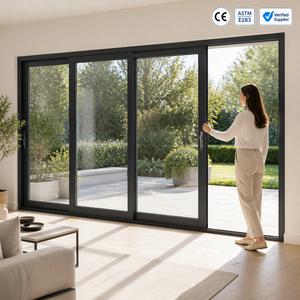 Minimalist Line
Minimalist Sliding Aluminum Interior & Entrance System
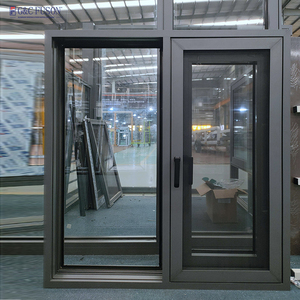 Passive Standard
Thermal Break Double & Triple Glazed Casement Windows
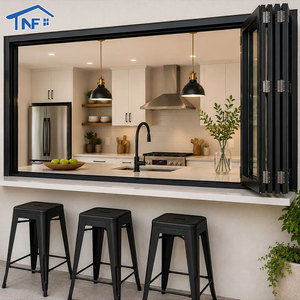 Acoustic Series
Soundproof Acoustic Bifold Aluminum Window Systems
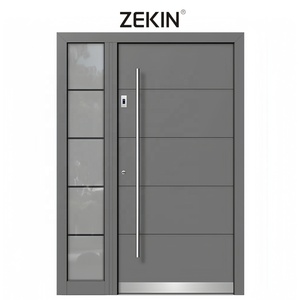 Armor Security
Luxury Ballistic & Anti-Theft Security Entry Doors
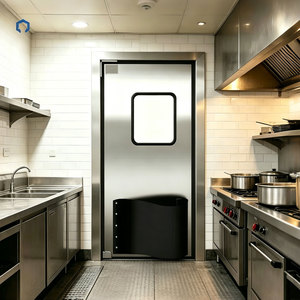 Commercial Grade
180° Commercial Aluminum Heavy-Traffic Swing Doors
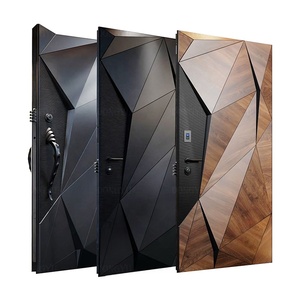 Grand Pivot
Architectural Villa Cast Aluminum Oversized Pivot Doors
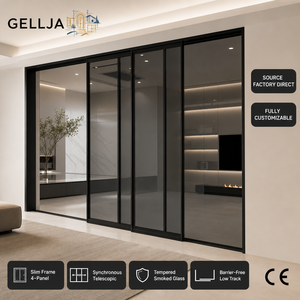 Panoramic Series
Heavy-Duty Flush Track Sliding Patio Door System
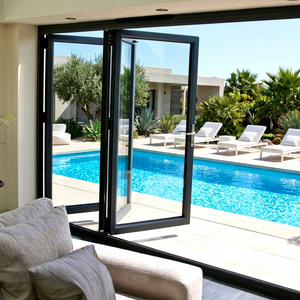 Hurricane Proof
Severe Weather Hurricane Impact Bi-Folding Glass Doors
Engineering Principles of Aluminum Clad Architectural Windows
Thermal Stratification & Isothermal Performance
Aluminum clad windows represent the pinnacle of composite fenestration technology. By fusing the structural resilience, dimensional stability, and extreme weatherability of exterior aluminum profiles with the natural thermal insulation, acoustic absorption, and tactile luxury of interior wood or composite cores, architects achieve an envelope that defies severe climates. In conventional aluminum frames, thermal conductivity represents an inevitable thermal bridge (λ ≈ 160 W/m·K). Our OEM/ODM systems employ precision-engineered Polyamide (PA66 GF25) thermal barrier struts with 25% glass fiber reinforcement, bringing overall frame U-factors down to passive house standards (Uw ≤ 0.8 W/m²·K).
The mechanical coupling between exterior aluminum cladding and inner timber substrates must accommodate differential thermal expansion. Aluminum exhibits a thermal expansion coefficient of approximately 23 × 10⁻⁶ /K, while structural timber expands at a rate of 5 × 10⁻⁶ /K. Our patented floating nylon clip connections allow the two materials to independently expand and contract across seasonal thermal extremes ranging from -35°C to +85°C without causing frame deformation, structural warpage, or seal failure.
Cyclone-Resistant Pressure Equalization
Water penetration during catastrophic weather events is driven not by precipitation volume, but by aerodynamic pressure differentials between the building exterior and interior cavity. Utilizing Rain-Screen Principle engineering, our aluminum clad systems integrate unsealed exterior drainage cavities with continuous, pressure-equalized interior EPDM gaskets. When dynamic wind-loads strike the facade, air immediately pressurizes the internal weep chambers to equal exterior wind loads, eliminating the pressure differential that draws water inward.
For coastal zones subject to category 4 and 5 hurricanes, our export-grade framing incorporates multi-point perimeter deadbolts based on our proprietary Four-Side Six-Point locking invention patent. Combined with structural silicone glazed (SSG) laminated glass assemblies featuring 1.52mm to 2.28mm SentryGlas® (SGP) interlayers, these assemblies survive projectile impacts exceeding 15 m/s and sustain cyclic pressure reversals up to 5,000 Pa without structural breach.
| Performance Metric | Standard Thermal Break Aluminum | Standard Solid Wood Window | DERCHI Engineered Aluminum Clad |
|---|---|---|---|
| Thermal Transmittance (Uw) | 1.6 – 2.4 W/m²·K | 1.2 – 1.6 W/m²·K | 0.79 – 1.1 W/m²·K (Passive Certified) |
| Coastal Salt-Spray Resistance | Medium (Depends on powder coat) | Low (High rot & moisture vulnerability) | Ultra-High (Qualicoat Class 3 PVDF / Seaside) |
| Air Permeability (EN 12207) | Class 3 | Class 3 | Class 4 (≤ 0.05 m³/h·m at 100 Pa) |
| Water Tightness (EN 12208) | Class 7A (300 Pa) | Class 6A (250 Pa) | Class E1200 (1200 Pa Dynamic Pressure) |
| Structural Wind-Load (EN 12210) | Class C3 (1200 Pa) | Class C2 (800 Pa) | Class C5 (≥ 3000 Pa Typhoon Impact Tested) |
Future Procurement Trends in High-End Fenestration
Global building mandates, supply chain realignments, and architectural preferences are transforming how developers, general contractors, and overseas dealers source window packages. Understanding these shifts is vital for mitigating project risk and securing long-term capital appreciation.
Direct Manufacturer Offshoring
Escalating localized labor costs in North America, Europe, and Australasia are forcing real estate developers to bypass domestic tier-2 aggregators. Direct factory-level procurement from turnkey manufacturers with vertically integrated extrusion, powder coating, double/triple IGU fabrication, and assembly lines reduces procurement line-item budgets by 35% to 50% while unlocking fully custom structural extrusions.
BIM Integration & Digital Twin Validation
Leading tier-1 institutional projects now demand pre-manufacturing integration with Revit and Building Information Modeling (BIM) workflows. B2B buyers mandate full parametric 3D CAD shop drawings, finite element stress modeling, and psychrometric condensation boundary simulations prior to metal extrusion, eliminating costly field alterations upon container discharge.
Audited Decarbonization & Circularity
Stringent ESG reporting frameworks, LEED v4.1 credits, and EU Carbon Border Adjustment Mechanisms (CBAM) are establishing low-embodied-carbon aluminum as a strict sourcing condition. Procurement directors now prioritize suppliers using renewable hydropower smelting for billets and high recycled aluminum content (up to 75%), backed by comprehensive Environmental Product Declarations (EPD).
Technological Development Trends in Aluminum Clad Systems
As architecture evolves toward transparent, boundless building envelopes without compromising environmental responsibility, window hardware and metallurgy are experiencing revolutionary advancements.
Ultra-Slim Sightlines & Structural Glazing
The boundary between structural curtain walling and standard residential fenestration has blurred. Modern developments favor concealed sash designs, zero-sightline outer frames embedded entirely into rough wall finishes, and structural glazed corners that maximize daylight transmission while keeping wind load ratings intact.
Smart IoT & Concealed Motorization
High-span sliding and oversized pivot windows are integrating brushless linear motors, concealed chain actuators, and smart home ecosystems (KNX, Zigbee, BACnet). Automated atmospheric sensors automatically modulate sash positions for passive nighttime cooling, closing securely when rain or wind sensors trigger.
Vacuum Insulating Glass (VIG) & Aerogels
To achieve extreme U-values in slender configurations without the structural load of triple or quadruple glass panes, next-generation aluminum clad assemblies incorporate 8.3mm to 10.3mm Vacuum Insulating Glass (VIG). Delivering thermal center-of-glass performance down to Ug = 0.4 W/m²·K, VIG represents the ultimate horizon for zero-carbon architecture.
Why Global Projects Rely on DERCHI Engineering
Guangdong Dejiyoupin Doors and Windows Co., Ltd. (DERCHI) combines over 25 years of specialized craftsmanship with one of Asia's largest intelligent manufacturing facilities in Foshan, Guangdong. Certified as a "China Famous Brand" by Xinhua News Agency, we provide institutional accountability from profile extrusion to final port containerization.
180,000 m² Automated Hub
Operating high-precision German CNC multi-axis machining centers, automated profile cutting, robotic corner-crimping units, and automated IGU lines, we achieve an annual production capacity surpassing 1,000,000 m², ensuring strict milestone control for large-scale developments.
Proprietary Inventions & Security
Holding more than 100 national invention and utility patents, our systems feature the patented Four-Side Six-Point locking design. This proprietary engineering compresses perimeter weatherstripping uniformly around the entire sash perimeter, boosting forced-entry deterrence and water tightness.
Verified Global Testing Standards
Every export series is systematically tested and accredited under major global regulatory bodies, including CE (European Union EN standards), NFRC (North American fenestration standards), AS2047 (Australian cyclone and air tightness standards), CSA (Canada), and ISO 9001 quality management audits.
Comprehensive Turnkey Engineering
We provide overseas developers and dealer networks with an 8-step lifecycle service protocol: architectural plan consultation, bespoke structural R&D, customized technical proposals, shop drawing generation, sample confirmation, factory QC, export packing, and on-site or remote installation supervision.
Frequently Asked Questions for Project Specifiers & Importers
Critical operational, structural, and logistics clarity for overseas architects, quantity surveyors, real estate developers, and window dealers.