Precision Fenestration & Entrance Systems
Factory-direct commercial and residential systems fabricated from certified 6063-T6 aluminum, fully customizable under comprehensive OEM/ODM contracts.

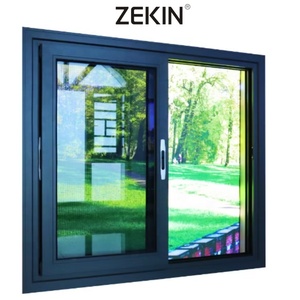
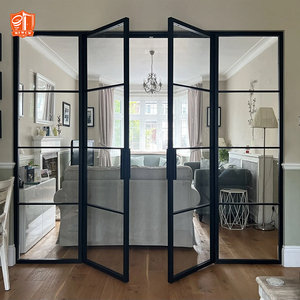
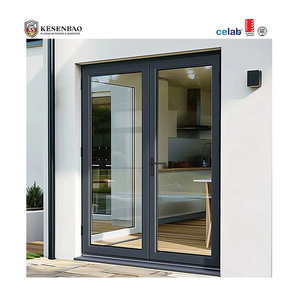
Engineering Standards for Commercial Aluminium Double Doors
Deconstructing structural performance, thermal transmittance metrics, multi-point kinetic locking, and metallurgical integrity in modern OEM/ODM fenestration.
In high-density commercial developments and contemporary residential projects, the architectural double door represents one of the most mechanically demanding components of the building envelope. Far beyond aesthetic entryways, double door assemblies must maintain absolute structural equilibrium against cyclic wind loading, prevent thermal conductance over wide surface areas, and provide uncompromising resistance to forced physical entry. For procurement executives, architects, and facade engineers, selecting an OEM/ODM manufacturing partner requires a deep technical appraisal of alloy quality, extrusion tolerances, polyamide thermal break integration, and certified hardware kinetic assemblies.
At DERCHI (Guangdong Dejiyoupin Doors and Windows Co., Ltd.), double door systems are manufactured using virgin 6063-T6 architectural grade aluminum extrusions, boasting profile wall thicknesses ranging from 2.0mm to 3.0mm depending on static deflection calculations (AAMA/WDMA/CSA 101/I.S.2/A440). Unlike standard light-duty fenestration, heavy-duty double swing and French double door configurations experience substantial torque forces across the active and passive door leaves. To counteract hinge sagging and operational misalignment over decades of high-frequency commercial cycling, our manufacturing base incorporates internal corner-cleat crimping reinforced with injected two-component epoxy adhesive, securing structural shear strength that exceeds traditional mechanical fastening methods by more than 300%.
The Metallurgy of Long-Term Fenestration Stability
DERCHI uses exclusively primary ingots with tight metallurgical tolerances (Si: 0.2-0.6%, Mg: 0.45-0.9%), eliminating recycled scrap impurities that cause internal stress cracking and premature powder-coat blistering under aggressive coastal exposure. Every extrusion profile undergoes an automated aging process to achieve a minimum Webster hardness of 12-14 HW, ensuring profile deflection remains well within L/175 limits under peak design pressures.
Future Procurement Trends in the Global Fenestration Supply Chain
Key economic, regulatory, and logistics shifts reshaping international door and window specification from 2025 through 2030.
Tier-1 Consolidation & Direct OEM Partnerships
Tier-1 general contractors and hospitality developers are bypassing local intermediate stockists in favor of direct engineering engagement with specialized manufacturers. This transition cuts 25%–35% off unit landed costs while giving builders direct access to factory BIM integration, CAD shop drawing drafting, and bespoke structural mullion calculations directly tailored to specific facade deadloads.
Mandatory Decarbonization & Low-Carbon Extrusions
Global regulatory bodies—including the EU Energy Performance of Buildings Directive (EPBD) and North American CalGreen standards—are demanding quantifiable Environmental Product Declarations (EPDs). Future procurement prioritizes manufacturing facilities utilizing renewable hydroelectricity in primary ingot smelting, closed-loop recycled water lines, and non-toxic chromate-free pre-treatment chemical baths.
Modular Pre-Glazed Containerized Shipments
Escalating on-site skilled labor rates across North America, Australia, and Western Europe make site-glazing economically prohibitive. Leading builders now specify unitized, factory pre-glazed, pre-hung double door cassettes shipped in custom steel seismic crating. This plug-and-play installation protocol shortens building rough opening enclosure times by up to 60%.
Product Engineering Trends: Next-Gen Double Door Systems
Technological leaps in multi-cavity thermal management, kinetic multi-point security, and architectural ultra-slim sightlines.
The contemporary architectural movement demands unobstructed panoramic view corridors, which has pushed door profiles toward razor-thin sightlines. Historically, narrow sightlines compromised structural rigidity and thermal insulation. However, technological breakthroughs in cross-linked structural polyamide engineering and high-tensile alloy compositions have resolved this dilemma, allowing commercial aluminium double doors to achieve ultra-slim 25mm–38mm visible stiles while comfortably carrying individual insulated glass panel weights exceeding 350 kilograms.
Multi-Cavity PA66-GF25 Thermal Barriers
Traditional single-strut polyurethane thermal breaks are rapidly being replaced by multi-chambered polyamide 66 reinforced with 25% chopped fiberglass (PA66-GF25). These advanced isolators boast thermal expansion coefficients virtually identical to aluminium, preventing structural profile curvature ("bimetallic warp") during extreme temperature differentials between interior conditioned spaces and searing exterior sunlight.
Kinetic Multi-Point Perimeter Compression
Standard double doors frequently suffer air leakage and acoustic bypass at the passive astragal junction. Next-generation double entrance doors integrate concealed full-height gear-driven driving rods. DERCHI’s patented multi-point kinetic locking system draws both door sashes symmetrically into continuous, vulcanized EPDM triple gaskets, delivering air infiltration values below 0.1 CFM/ft².
Storm-Grade Acoustic & Impact Glazing Build-Ups
Modern commercial buildings demand dual-threat fenestration: extreme hurricane missile defense (ASTM E1886/E1996) paired with high acoustic decibel attenuation (STC 40+). Through custom multi-layered SentryGlas (SGP) and acoustic PVB interlayers bonded within warm-edge argon-injected insulated glass units (IGUs), double doors insulate both against natural disasters and dense urban acoustic pollution.
Aluminium Double Door Technical & Testing Specifications
Benchmark mechanical parameters and certification baselines applied across our industrial OEM manufacturing lines.
| Performance Parameter | Test Standard / Benchmark | DERCHI High-Performance Engineering Standard | Contractor Procurement Impact |
|---|---|---|---|
| Aluminium Alloy & Temper | ASTM B221 / EN 755 | 6063-T6 / 6061-T6 (Custom Billet Grade) | Prevents frame bending; guarantees 30+ year structural lifetime. |
| Thermal Transmittance (U-Value) | NFRC 100 / EN ISO 10077 | 1.1 – 1.6 W/m²·K (0.19 – 0.28 BTU/hr·ft²·°F) | Complies with global Net-Zero and ENERGY STAR performance criteria. |
| Air Infiltration Resistance | ASTM E283 / EN 12207 | Class 4 / < 0.05 cfm/ft² at 300 Pa | Drastically lowers HVAC operating loads; eliminates drafts. |
| Water Penetration Resistance | ASTM E331 / EN 12208 | Static: 720 Pa (15 psf); Dynamic: 900 Pa | Zero water bypass during typhoon conditions or coastal monsoons. |
| Design Pressure (Wind Load) | ASTM E330 / AS 4055 | DP65 – DP100 (Up to 4800 Pa Ultimate Load) | Engineered for high-rise coastal villas, resorts, and ocean-facing towers. |
| Acoustic Isolation Rating | ASTM E90 / ISO 10140 | STC 38 – STC 44 / OITC 32 – 36 | Critical for luxury hospitality projects and hospital noise attenuation. |
| Surface Coating Integrity | AAMA 2604 / 2605 / Qualicoat Class 2 | Superdurable Fluorocarbon (PVDF) / Coastal Anodizing 25μm | Resists 4,000+ hours of continuous salt spray testing without pitting. |
| Forced Entry Security | ASTM F588 / EN 1627 (RC3 Class) | Patented Four-Side Six-Point Anti-Theft Lock | Superior burglar resistance eliminating secondary security gates. |
Frequently Asked Questions for B2B Importers & Contractors
Essential commercial, technical, and logistic insights to streamline direct factory double door sourcing.
What specific advantages does OEM/ODM direct factory procurement offer over regional distributors?
How does the patented "Four-Side Six-Point Lock" solve double door sagging and security vulnerabilities?
What finishes and powder coatings are recommended for extreme coastal or tropical resort projects?
What are the minimum order quantities (MOQ) and production lead times for custom double door systems?
How are oversized glass and heavy double door frames protected during oceanic container shipping?
Does DERCHI provide on-site installation support and international technical project guidance?
Launch Your Custom Double Door Project with Our Engineering Team
Whether you require standard high-performance double swing doors, commercial entrance gates, or fully customized architectural extrusions for an upcoming tender, our technical specialists will review your CAD drawings and provide factory-direct pricing within 24 hours.