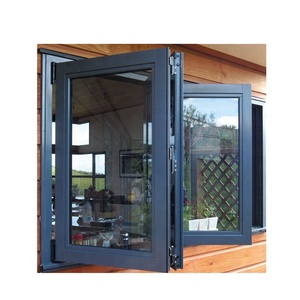
Direct Manufacturing Lineup
High-Performance Architectural Fenestration Systems
Engineered to surpass global structural, thermal, and acoustic benchmarks. Explore factory-engineered casement systems, panoramic sliding portals, and multi-point impact-resistant solutions tailored for high-wind, coastal, and luxury developments.
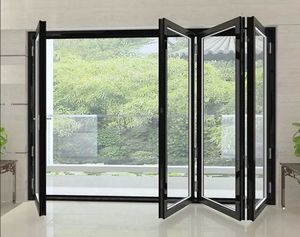
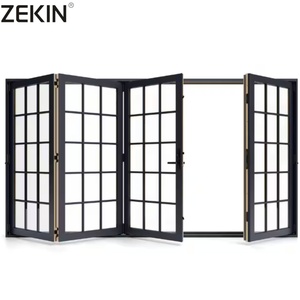
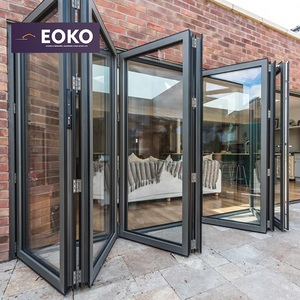
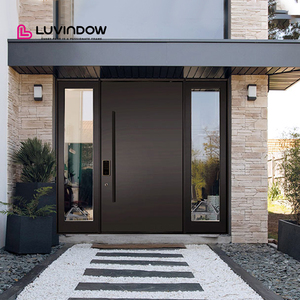
180,000m²
Intelligent Smart Plant Base
1,000,000m²+
Annual Fenestration Capacity
100+
National Patents (Four-Side Six-Point Lock)
18,000+
Delivered Commercial & Residential Projects
Enterprise Manufacturing Competence
Why Foshan, China Dominates Global Aluminum Casement Window Engineering
In high-specification fenestration fabrication, Guangdong Dejiyoupin Doors and Windows Co., Ltd. (DERCHI) stands at the pinnacle of Chinese industrial capability. We integrate raw alloy metallurgical control, thermal-barrier precision rolling, automated CNC machining, and comprehensive pre-shipment acoustic and water-tightness chamber testing.
Patented Anti-Theft & Air-Tight Locking
Unlike standard dual-point latches, our engineering features the proprietary Four-Side Six-Point Perimeter Lock invention patent. This mechanism distributes perimeter gasket compression symmetrically, eliminating corner air infiltration and yielding unprecedented resistance against forced entry and severe cyclonic pressure.
Zero-Error CNC Precision Fabrication
Operated within an intelligent 180,000 m² base, our automated multi-axis German cutting centers achieve profile sizing tolerance within ±0.1mm. High-strength corner keys are injected with structural two-component epoxy sealants, guaranteeing that casement sashes remain dead-square throughout decades of thermal expansion.
Comprehensive Global Certification
Recognized as a "China Famous Brand" by Xinhua News Agency, DERCHI systems hold genuine, third-party laboratory credentials: CE (EN 14351-1), NFRC (USA), AS2047 (Australia), CSA (Canada), ENERGY STAR, and ISO 9001. We engineer to pass stringent international building code audits directly from factory gates.
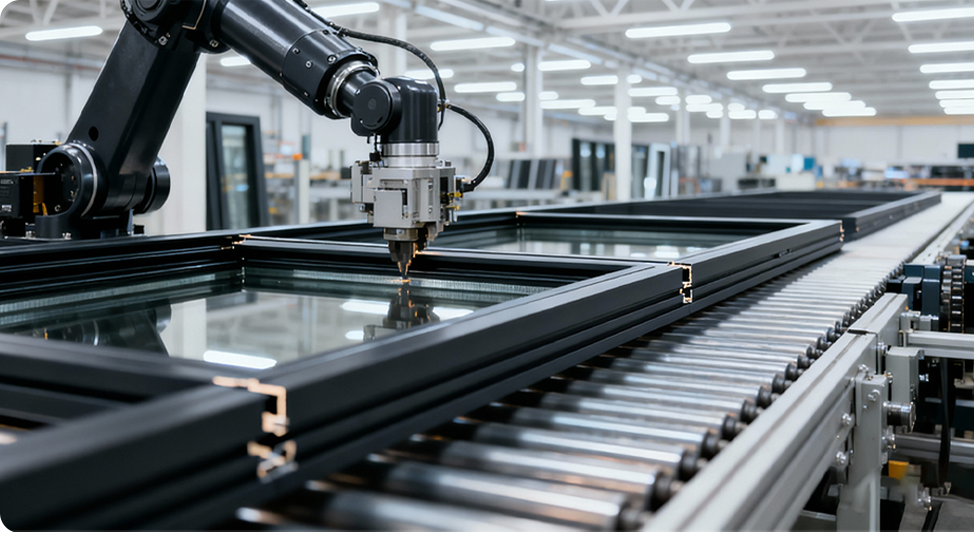
Full Process Chain In-House Production
From aluminum billet heating and architectural extrusion processing to fluoro-carbon powder coating, EPDM co-extruded gasket vulcanization, and insulated glass unit (IGU) assembly, DERCHI keeps the complete value chain in-house. This centralized control prevents subcontractor variances and ensures uncompromised quality.
Send an Inquiry
Industry Technology Evolution
The Engineering Evolution of Architectural Casement Windows
From basic cold-bridge aluminum frames to smart-integrated, carbon-neutral thermal barrier fenestration systems: how China's premier factories have rewritten global performance benchmarks over the past two decades.
Architectural aluminum casement windows have experienced a structural revolution. Historically criticized in early 2000s commercial designs for high thermal conductivity and edge air-leakage during severe storms, modern casements built by top-tier Chinese manufacturers now deliver performance metrics rivaling triple-glazed structural wall units. By moving past simple mechanical joining, industry leaders like DERCHI leverage structural thermal breaks, multi-cavity polyamides, and advanced surface metallurgy.
Multi-Chamber Polyamide Isolators
Early thermal breaks used standard 14.8mm PA66 GF25 nylon strips. Modern casements incorporate 35.3mm+ multi-cavity polyamide struts infused with aerogel insulation cores, slashing overall frame thermal conductance (Uf values) down to ≤ 1.1 W/(m²·K), dramatically reducing building HVAC loads.
Co-Extruded Continuous Vulcanized Gaskets
Traditional corner-cut EPDM seals eventually shrink and degrade under intense UV exposure. Leading Chinese factories have shifted to automotive-grade continuous vulcanized closed-cell EPDM corner-welded systems, ensuring continuous, unbroken pressure-equalized sealing that maintains acoustic suppression up to STC 45.
Concealed Heavy-Duty Friction Hinges
Aesthetic minimalism has eliminated bulky face-mounted barrel hinges. Advanced concealed 304/316 austenitic stainless-steel four-bar hinges support sash weights exceeding 180kg, enabling architects to design floor-to-ceiling glass casements without visible exterior hardware interrupting facade sightlines.
| Performance Criterion | Legacy Aluminum Casement | Standard Market Offering | DERCHI High-Spec Engineering |
|---|---|---|---|
| Thermal Transmittance (Uw) | ≥ 3.8 W/(m²·K) | 2.2 – 2.8 W/(m²·K) | 0.79 – 1.30 W/(m²·K) (Passivhaus Ready) |
| Air Infiltration (ASTM E283) | 0.30 cfm/ft² | 0.15 cfm/ft² | < 0.02 cfm/ft² (Absolute Compression Seal) |
| Water Penetration (ASTM E331) | 300 Pa (6.24 psf) | 700 Pa (14.6 psf) | ≥ 1200 Pa (25.0 psf Hurricane Standard) |
| Acoustic Attenuation (STC) | 28 – 30 dB | 33 – 36 dB | 42 – 47 dB (Acoustic Laminated Double/Triple IGU) |
| Security & Forced Entry | Single-Point Cam Latch | 2-Point Sliding Multipoint | Patented 4-Side 6-Point Dual Transmission Lock |
Strategic Procurement Insights
Future Sourcing Trends for Global Fenestration Buyers
How supply chain executives, multi-family general contractors, and estate developers are optimizing their import strategies from China to mitigate tariff barriers, inflation risks, and carbon emissions.
1. Decarbonized Low-Carbon Green Aluminum
Global regulatory frameworks such as the EU Carbon Border Adjustment Mechanism (CBAM) are compelling developers to quantify embodied carbon. Top Chinese extruders are pivoting toward hydro-powered and recycled billet sourcing, providing comprehensive Environmental Product Declarations (EPDs) with verified lifecycle audits.
2. BIM-to-Fabrication Digital Procurement
Paper submittals and static CAD files are obsolete. Modern international procurement mandates parametric Revit/BIM family integration directly into Chinese factory CAM software. This allows real-time clash detection, rapid shop drawing approvals, and zero-defect framing straight into structural steel or concrete openings.
3. Complete Architectural Envelope Consolidations
Developers avoid fragmented vendor risk by consolidating purchases. Rather than sourcing casement windows, grand pivot doors, bifold walls, and sunrooms from disjointed shops, project managers now contract integrated manufacturers like DERCHI to ensure matching paint finishes, unified hardware anodization, and synchronized containerized dispatch.
Risk-Free Factory Workflow
End-to-End B2B Export & Customization Protocol
A structured, milestone-driven procurement journey designed specifically for overseas developers, minimizing lead time variability, communication gaps, and on-site fitting discrepancies.
01
Drawing Schedule Review
Analysis of your architectural plans, wind-load zoning demands, and rough opening tolerances by structural engineers.
02
Custom R&D & Profiles
Selection of optimized profile dies, structural mullion calculations, and thermal break sizing to match local energy codes.
03
Technical Submittals
Issuance of stamped engineering calculations, shop drawings, glass stress analysis, and cross-section details for permit sign-off.
04
Hardware & Finish Match
Physical sample dispatch: Qualicoat-certified powder coatings, PVDF finishes, custom handles, and architectural glass tint mockups.
05
Pre-Production Deposit
Transparent escrow or milestone-based commercial contracts securing automated CNC extrusion slots and raw material procurement.
06
Virtual Dimension Check
Laser measurement verifications, factory mock-up assembly tests, and High-Resolution live-video inspection runs.
07
360° QC & Stamping
Continuous testing for water tightness, seal integrity, and locking smooth-torque operation under rigorous ISO 9001 supervision.
08
Export Crating & Support
Steel-reinforced fumigated timber crating, sea freight loading with moisture absorbers, and complete jobsite installation videos.
Professional Procurement Q&A
Frequently Asked Questions on Importing Windows from China
Critical, unvarnished guidance addressing logistics, structural wind verification, quality assurance, and custom fabrication challenges encountered by international buyers.
How can overseas buyers verify the structural and hurricane capability of Chinese aluminum casement windows?
Verification must be grounded in empirical laboratory testing rather than manufacturer brochures. Prior to issuing deposits, request formal third-party test reports conducted in accordance with ASTM E330 (Uniform Structural Wind Load), ASTM E1886/E1996 (Missile Impact and Cyclic Pressure), or AS2047 (Australian Standards). DERCHI designs impact-rated systems utilizing high-tensile 6063-T6 or 6061-T6 aluminum alloys combined with SentryGlas (SGP) or high-grade PVB laminated glass interlayers, capable of withstanding category 5 hurricane wind pressures in excess of 5000 Pa.
What is the difference between outward-opening, inward-opening, and Tilt-and-Turn casement systems?
Outward-opening casements are popular in Anglo-American and tropical construction because high exterior winds press the sash directly against the perimeter gasket, naturally increasing air and water tightness under stormy weather. Inward-opening or European-style Tilt-and-Turn casements feature dual hardware functions: turning the handle 90° swings the window open like a door for easy glass cleaning, while a 180° rotation tilts the top inward by 10-15cm for draft-free ventilation. DERCHI manufactures all configurations using heavy-duty perimeter locking components.
How do top factories eliminate thermal bridging and interior frame sweating?
Internal condensation occurs when cold exterior temperatures conduct through single-wall aluminum profiles to warm, humid indoor air. High-grade Chinese manufacturers solve this via Isobaric Cavity Design and Technoform PA66 GF25 thermal barrier strips that mechanically divide exterior and interior aluminum extrusions. Combined with warm-edge spacer bars (such as Swisspacer or Technoform) and argon gas-filled Low-E insulated glass units, internal frame temperatures remain consistently above dew points, fully preventing mold development and condensation.
What crating and packaging standards prevent maritime damage during trans-ocean shipping?
Maritime freight exposes fenestration products to heavy vibrations, temperature swings, and salt-laden humidity. DERCHI protects every casement unit using a multi-layer defense system: (1) peelable protective film across all visible powder-coated extrusions, (2) dense foam edge corner protectors, (3) heavy shrink-wrap with silica gel desiccants to counter container condensation, and (4) reinforced, fully enclosed ISPM-15 fumigated plywood crates or customized steel A-frames designed for direct forklift and jobsite crane offloading.
What is the typical production lead time, and how are replacement glass panes handled if damaged?
Standard custom architectural orders typically require 25 to 35 calendar days for precision manufacturing after shop drawing sign-off. High-volume custom dies or specialized PVDF fluorocarbon color matches may add 7 to 10 days. In the rare event of jobsite damage, all DERCHI orders are manufactured from archived parametric BIM schedules; replacement IGU glass or individual extrusion profiles are fabricated and dispatched via prioritized air courier (DHL/FedEx) or shipped with backup hardware spares included in the initial container.
Can DERCHI engineer custom extrusions matching historical sightlines or complex curtain-wall interfaces?
Yes. Supported by our 30+ in-house R&D engineering department and proprietary mold manufacturing workshop, we engineer custom architectural extrusion profiles to meet bespoke municipal heritage sightline guidelines or proprietary structural curtain-wall interfaces. New steel extrusion dies are mapped, sampled, and tested within 14 business days, granting international architects ultimate structural and stylistic flexibility.
Accelerate Your Fenestration Project with Direct Factory Pricing
Send our senior engineering team your architectural window schedules, CAD elevations, or custom specification briefs. Receive detailed shop drawings, thermal calculations, and competitive factory-direct quotations within 24 hours.
Send an Inquiry