Engineered Fenestration Systems Recommended by Experts
Precision-machined architectural systems built to withstand stringent coastal and severe meteorological demands. Sourced directly from our Foshan intelligent manufacturing facility with full international compliance.
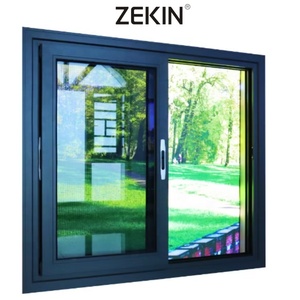
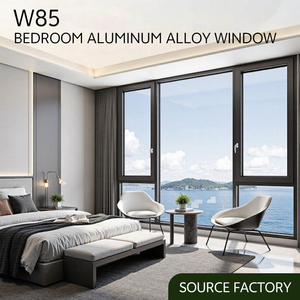
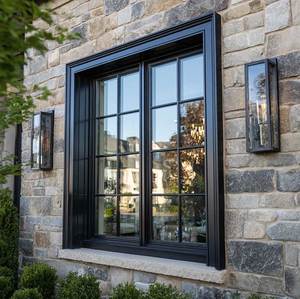
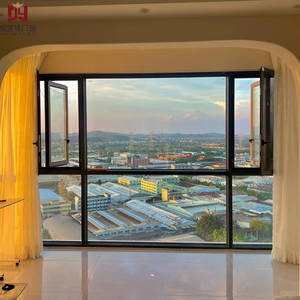
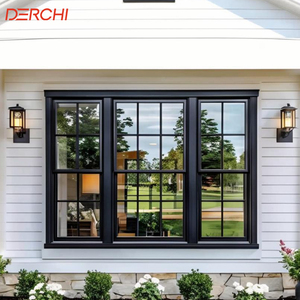
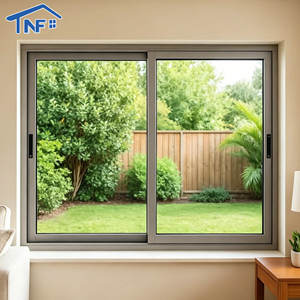
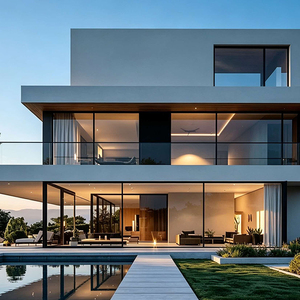
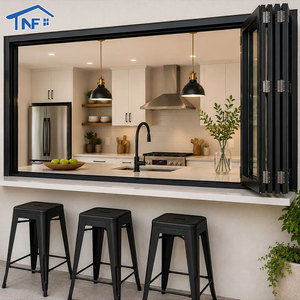
Scale, Precision Engineering & Global Supply Chain Proof
Guangdong Dejiyoupin Doors and Windows Co., Ltd. (DERCHI) operates one of Southern China's largest intelligent fenestration facilities, eliminating delivery failures and custom fit mismatches.
Procuring exterior fenestration from China is no longer merely an exercise in finding the lowest headline quote. For international developers, general contractors, and structural engineers, it has evolved into a strategic balance between traceable metallurgy, certified thermal efficiency, and structural resilience against extreme weather conditions. DERCHI operates from Building 19, Shenke Chuangzhi Park, Shishan Town, Foshan, maintaining a tightly audited supply network supported by more than 600 dedicated production staff and a team of 30+ senior research engineers.
Unlike regional assemblers that rely on spot-market extruded bars of unverified provenance, our facility employs virgin architectural-grade 6063-T5/T6 aluminum alloys, maintaining precise mechanical tensile tolerances and corrosion-resistant alloy chemistries. Recognized as a "China Famous Brand" by Xinhua News Agency and maintaining extensive international credentials including CE (EN 14351-1), NFRC, AS2047, CSA, and ISO 9001, our operations bridge the gap between Chinese factory-gate economics and Western structural governance.
Patented 4-Side 6-Point Security
Engineered with proprietary multipoint locking kinematics that engage the perimeter frame simultaneously across four distinct faces. This invention delivers unprecedented anti-theft intrusion barriers while guaranteeing positive gasket compression against torrential driving rains and positive/negative hurricane pressure cycling.
Severe Coastal Resilience
Engineered for high-salinity maritime microclimates. Utilizing certified marine-grade fluoropolymer (PVDF) powder coats compliant with AAMA 2605 guidelines and Grade 316 stainless steel friction hinges, our window assemblies resist surface chalking, pitting, and galvanic degradation across decades of exposure.
Zero-Error BIM & Shop Drawing Audit
Every foreign project is managed through an 8-step quality system. Prior to cutting, our facade engineers run thermal modeling (U-factor and SHGC simulations) and structural finite element analysis (FEA) directly against your architectural drawings to eliminate costly on-site installation mismatches.
China Aluminium Window Price Matrix: Cost Engineering Analysis
Demystifying FOB vs. Landed cost structures. Understand the precise architectural variables governing square-meter rates across modern Chinese production plants.
In wholesale window procurement, generalized quotes without explicit structural specifications typically lead to hidden project variations, late site modifications, or non-compliant glass build-ups. Aluminum window costs are fundamentally determined by four core engineering drivers: profile thickness and extrusion geometry, thermal break polymers (extruded polyamide PA66GF25 vs. cheap PVC substitutes), glazing complexity, and hardware kinematic grade.
Below is an empirical pricing index based on current Chinese production metrics for commercial and high-end residential export specifications:
| System Typology | Wall Profile Spec | Glazing Configuration | Hardware Grade | Est. Export Price (USD / m²) |
|---|---|---|---|---|
| Standard Non-Thermal Sliding | 1.4mm 6063-T5 | 5mm + 12A + 5mm Tempered Clear | Domestic Multi-Point | $65 - $95 |
| Architectural Thermal Break Casement | 1.6mm - 2.0mm PA66 Break | 6mm Low-E + 12Ar + 6mm Tempered | European Concealed / Heavy-Duty | $125 - $185 |
| Engineered Hurricane Impact Casement | 2.0mm - 3.0mm Structural | 6mm + 1.52PVB/SGP + 6mm + 12A + 6mm | Custom 6-Point Kinematic Lock | $190 - $290 |
| Thermally Broken Folding / Bifold Systems | 2.0mm - 2.5mm Heavy Load | 6mm Low-E + 14Ar + 6mm Safety Glass | Stainless Bottom Rolling Heavy Track | $160 - $240 |
| Ultra-Slim Architectural Minimalist Sliding | 3.0mm Reinforced Interlock | 8mm + 16Ar + 8mm Low-Iron Double Silver | Recessed Motorized or German Fluid Rollers | $240 - $380+ |
Procurement directors must look beyond the initial factory bill of quantities (BOQ). A complete lifecycle evaluation must include crate crating standards (ISPM 15 heat-treated closed plywood with internal desiccants), container stuffing volume optimization, local import tariffs, and compliance documentation. By sourcing from an integrated manufacturer that owns the full assembly line, buyers capture significant supply chain margin while eliminating intermediary markups.
Future Procurement Shifts & Technological Evolution
Anticipating structural shifts in global fenestration demand to help project developers make future-proof building envelope investments.
Decarbonization & Low-E U-Values
Global building energy codes are ratcheting downwards, pushing requirements toward overall window assembly U-factors below 1.2 W/m²·K (0.21 BTU/h·ft²·°F). The industry is pivoting away from standard double glazing to triple-pane insulating glass units (IGUs) backfilled with 95% argon concentration and warm-edge composite spacers (such as Technoform), mitigating thermal bridging in severe heating and cooling zones alike.
Structural Narrow-Sightline Demands
Contemporary architectural aesthetics demand maximum glass-to-frame ratios. This trend is driving Chinese engineering towards ultra-slim interlock casements (often under 20mm sightlines) capable of carrying massive panel weights exceeding 400kg. To maintain deflection standards (L/175 or L/240) under peak gust pressures, profiles increasingly incorporate internal carbon-fiber stiffeners and high-yield alloy reinforcements.
Circular Materials & Low-Carbon Billets
Major developers operating under LEED, BREEAM, or DGNB standards now systematically evaluate the embodied carbon footprint of the facade. DERCHI has aligned its upstream supply lines with renewable-energy-smelted aluminum ingots, drastically reducing carbon intensity per metric ton of extruded profile without compromising the structural integrity or anodic anodizing yield.
Frequently Asked Engineering & Logistics Questions
Clear, uncompromised answers covering production lead times, structural certification, oceanic crating safeguards, and custom tooling.
Send an InquiryHow does your factory ensure profile wall thickness matches international structural codes?
Every extruded batch undergoes rigorous ultrasonic wall thickness verification and Webster hardness testing prior to CNC machining. For standard structural export lines, we adhere to minimum 1.4mm to 2.0mm wall standards for residential windows and 2.0mm to 3.0mm+ for commercial curtain systems, matching ASTM, AAMA, and AS2047 design parameters.
What specific impact certifications do your hurricane windows hold?
Our impact-rated windows and doors undergo large missile impact testing (Level D and Level E) and cyclic wind pressure regimens complying with ASTM E1886 and ASTM E1996 standards. Assemblies feature structural SentryGlas (SGP) or high-tensile PVB laminated makeups with specialized deep-glazing pockets to prevent glass panel pull-out under extreme coastal barometric differentials.
How are fragile, extra-large double and triple glazed units protected during sea transit?
We deploy full-protection export packaging engineered specifically for oceanic multi-modal handling. Frames and glass are individually wrapped in protective films, shock-absorbing corner pads, and sealed inside fumigated, non-coniferous hardwood or reinforced plywood cases. Internal shock indicators and moisture-absorbing silica canisters are standard across long-distance sea container freight.
Can DERCHI engineer custom extrusion dies for unique architectural profiles?
Yes. Our in-house R&D center operates dedicated CAD/CAM tooling facilities. For project volumes exceeding 500 m², custom die creation, sample prototyping, and thermal barrier calibration can typically be executed within 14 to 21 working days, giving architects total design liberty without long development delays.
What are the typical commercial production lead times from shop drawing sign-off?
Standard architectural configurations require 25 to 35 working days post final drawing confirmation and deposit settlement. Specialized architectural requirements—such as custom PVDF color formulation, triple-silver Low-E coating, or motorized hardware integration—typically run between 35 and 45 days. We schedule rolling releases to match phased construction schedules.
Ready to Source Directly from China's Leading Window Manufacturer?
Send our senior engineering desk your architectural elevation schedules, CAD drawings, or project tender documents for an authoritative, comprehensive cost takeoff within 24 hours.
Send an Inquiry