Waterproof Exterior
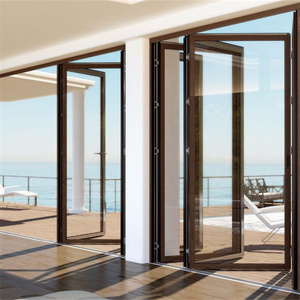
Explore our top-tier exterior folding patio doors, acoustic interior partitions, and high-performance weather-rated profiles fabricated in Foshan, China. Sized, tested, and certified for worldwide commercial and luxury residential builds.
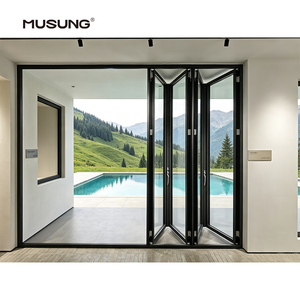
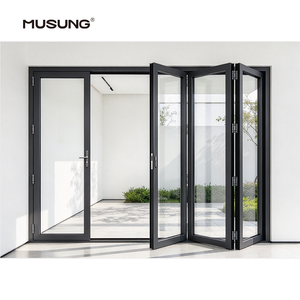
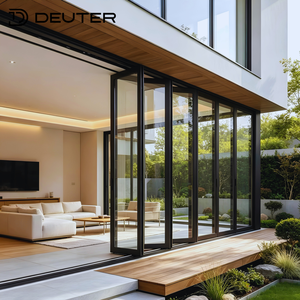
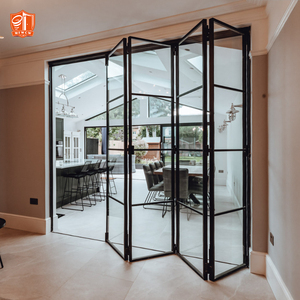
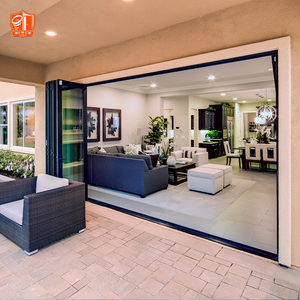
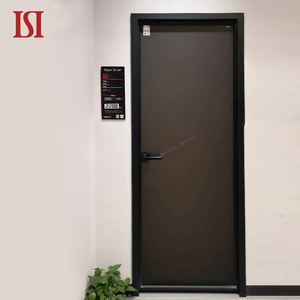
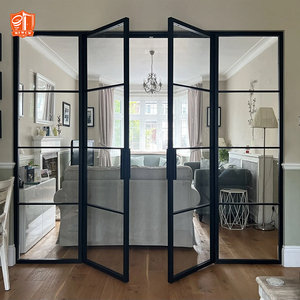
Global architectural demand for expansive daylight openings, panoramic indoor-outdoor transitions, and structural fenestration has elevated aluminium bifold doors into an essential envelope component. China's Pearl River Delta—anchored by Foshan—remains the epicenter of worldwide production, accounting for over 45% of global architectural aluminium exports.
The structural integrity of large bifold door leaves depends on primary architectural billets. Top-tier Chinese manufacturers insist exclusively on virgin 6063-T5 or 6063-T6 grade aluminium alloy, strictly limiting secondary recycled scrap in exterior structural profiles.
Through computer-controlled quenching and aging furnaces, tensile strength reaches ≥205 MPa and yield strength exceeds ≥160 MPa, ensuring zero deflection under severe wind pressure.
Bifold doors represent vulnerable access points if improperly anchored. Leading Chinese innovators have revolutionized multi-panel perimeter locking, moving far beyond standard edge flush bolts.
By engineering the patented Four-Side Six-Point Lock system, leaves lock simultaneously across the top track, bottom jamb, and inter-panel vertical meeting stiles, virtually neutralizing forced entry and preventing structural air-gap separation.
Eliminating thermal bridging across vast glazed spans is critical for modern energy building codes (Title 24, Part L, BCA). High-end suppliers deploy multi-cavity polyamide insulating strips (PA66GF25 with 25% glass fiber reinforcement).
When combined with argon-filled warm-edge insulated glass units (IGUs) and triple continuous vulcanized EPDM gaskets, overall system U-values drop dramatically down to 1.4 W/m²·K (0.25 BTU/hr·ft²·°F).
When conducting factory audits or reviewing commercial tenders in China, technical buyers must distinguish between low-cost commodity fabricators and tier-1 high-performance envelope manufacturers.
| Evaluation Parameter | Tier-1 Foshan Factory (e.g., DERCHI) | Generic Commodity Workshop | Procurement Significance |
|---|---|---|---|
| Aluminium Ingot & Alloy | Primary 6063-T6 Pure Ingot | Recycled aluminum scrap mix | Prevents micro-cracks, surface pitting, and structural failure under load. |
| Extrusion Wall Thickness | 2.0 mm – 3.0 mm heavy commercial profile | 1.2 mm – 1.4 mm thin-gauge residential | Essential for panel heights > 2.4 m to avoid sagging and track jamming. |
| Thermal Barrier Material | Polyamide PA66GF25 with technoform seal | Cheap PVC or recycled nylon | PVC degrades under UV exposure, leading to structural separation and air leaks. |
| Hardware & Roller Carriage | Custom 8-wheel SS316 bearings (up to 300kg/leaf) | 4-wheel nylon or zinc alloy cast wheels | Guarantees effortless finger-touch glide over 100,000 continuous opening cycles. |
| Surface Treatment Integrity | Qualicoat Class 2 / PVDF 3-coat (25-yr warranty) | Standard industrial powder coat | Impervious to salt spray, chalking, humidity, and intense UV degradation. |
| Locking Security | Patented 4-Side 6-Point Interlocking | Single-point latch with manual top/bottom pins | Meets RC2/RC3 anti-burglary standards and hurricane impact deflection tests. |
| International Certifications | CE, NFRC, AS2047, CSA, Hurricane Impact | Domestic test reports only | Enables rapid municipal building permit approval in USA, EU, and Australasia. |
*Data verified through ISO 9001 certified QA laboratories and international third-party testing bodies (Intertek, TUV, AWA).
Get Catalog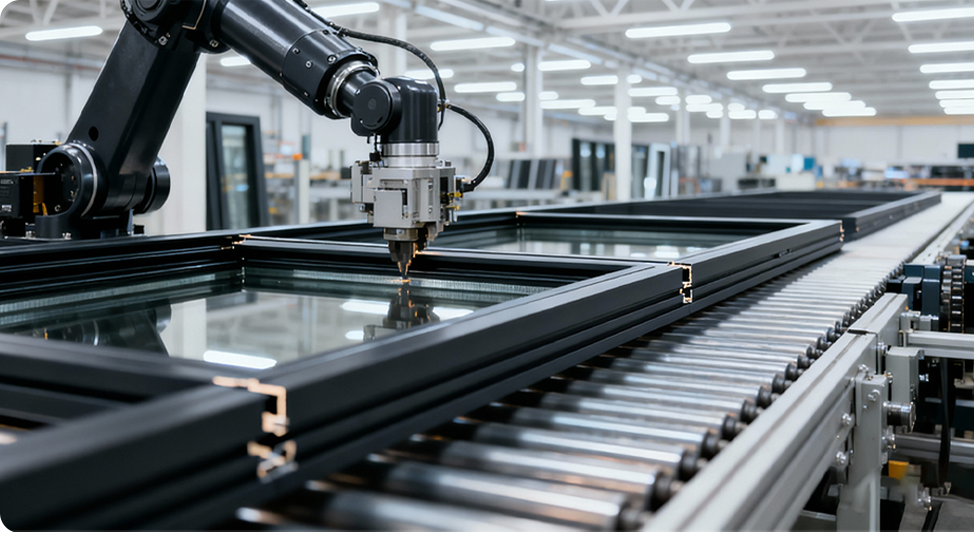
In architectural bifold doors, an alignment discrepancy of just 1.5 mm across a six-meter structural span can cause rolling binding, air infiltration, or hardware failure. That is why premier Chinese suppliers operate automated CNC cutting and multi-axis milling centers.
From computerized 45-degree dual-head miter saws to German-engineered corner-crimping machines, every frame is assembled under a 360-degree quality control regime. Corner joints are reinforced with extruded aluminium corner cleats injected with two-part polyurethane structural sealant to ensure absolute air, water, and structural cohesion.
Request Factory Audit DocumentationOver a quarter-century of fenestration specialization guarantees deep engineering wisdom, mature supply chains, and seasoned technical project leads.
Endorsed by state-level media and worldwide certification boards, affirming our role as a trusted Chinese door and window manufacturing leader.
Dedicated structural engineers who review CAD/BIM shop drawings, run structural wind-load simulations, and tailor custom thermal dies.
Reinforced non-fumigation plywood crate packing with moisture-barrier wrapping guarantees zero-damage arrival at global seaports.
As commercial and residential clients prioritize minimalist aesthetics and extreme energy decarbonization, procurement specifications for aluminium bifold doors are undergoing structural transformation.
The quest for uninterrupted visual connectivity has catalyzed ultra-narrow interlock meeting stiles. Modern premium bifold profiles now achieve inter-panel sightlines of just 95 mm to 110 mm without compromising structural wind-load capacity.
This is achieved by internal steel reinforcement channels or high-moment-of-inertia alloy ribs strategically placed inside the profile chambers, allowing glass-to-frame ratios to exceed 88%.
Traditional high step-over tracks are rapidly being replaced by zero-barrier ADA-compliant flush floor transitions. Advanced engineering resolves the age-old water-leak risk through recessed stainless-steel drainage troughs.
Integrated gravity flapper drainage valves allow massive volumes of rainwater to drain away from the building interior even during hurricane-force downpours, preserving flawless indoor-outdoor continuity.
Commercial hotels, luxury penthouses, and convention halls increasingly demand automated folding operations. Next-generation bifold systems incorporate brushless magnetic DC drive motors concealed directly inside the top track header.
Controlled via wall switches, smartphones, or building automation systems (BMS), these doors feature anti-pinch infrared safety curtains and battery-backup failsafe mechanisms.
Coastal developments across the Caribbean, Florida, Northern Australia, and Southeast Asia require missile-impact resilience. Certified Chinese suppliers now fabricate bifold doors with heavy-duty SentryGlas (SGP) laminated glass.
Reinforced dual-anchor hinges withstand cyclic wind pressures exceeding 4,500 Pa (equivalent to Category 5 hurricanes), certified under ASTM E1886/E1996 and AS2047 cyclonic protocols.
Institutional developers evaluating LEED, BREEAM, or DGNB green building credits now mandate Environmental Product Declarations (EPDs) from their Chinese fenestration partners.
Sourcing aluminium produced with hydropower or solar smelting reduces embodied carbon emissions below 4.0 kg CO₂e per kg of aluminium, providing substantial environmental score benefits.
Interior space management and urban renovation projects have sparked massive demand for Crittall-style slimline bifold doors. Featuring black anodized or matte powder finishes with customized true-divided or simulated divided lites (SDL).
These systems act as flexible acoustic acoustic room dividers between dining areas, patios, and executive offices while preserving an open architectural loft atmosphere.
Critical technical, operational, and commercial insights to help procurement directors, general contractors, and developers de-risk factory sourcing.
Send us your architectural elevations, door schedules, or structural tenders. Our engineering team will review your specifications, perform structural wind-load checks, and provide complete factory-direct pricing within 24 hours.