Featured CE Certified Aluminum Door & Entrance Systems
Precision-engineered in Foshan for luxury villas, commercial developments, and high-wind coastal environments. Explore factory configurations compliant with international fenestration standards.

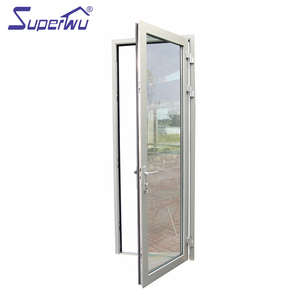
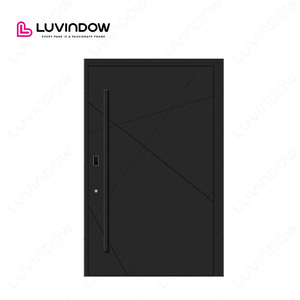
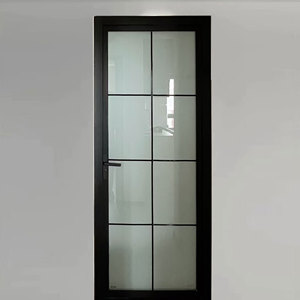
CE Certified Aluminum Front Doors: Engineering Specification & Harmonized Compliance
In modern commercial and residential façade engineering, the main entrance door is the primary thermal, mechanical, and security barrier of the building envelope. Sourcing from a CE certified aluminum front door factory and exporter requires navigating the rigorous mandates governed by the European Union Construction Products Regulation (CPR 305/2011) and the harmonized standard EN 14351-1:2006+A2:2016 (Windows and pedestrian doorsets without resistance to fire and/or smoke leakage characteristics).
For project developers, general contractors, and overseas fenestration distributors, verified CE certification is not merely a customs formality; it is an auditable declaration of performance (DoP). Valid CE-marked aluminum entrance systems undergo exhaustive laboratory assessments by accredited third-party notified bodies. Key parameters include Watertightness (EN 1027/EN 12208), Air Permeability (EN 1026/EN 12207), Resistance to Wind Load (EN 12211/EN 12210), and Thermal Transmittance (EN ISO 10077-1 & EN ISO 10077-2).
| Performance Characteristic | European Test Standard | Standard Commercial Grade | DERCHI Certified Architectural Grade |
|---|---|---|---|
| Air Permeability | EN 1026 / EN 12207 | Class 2 (300 Pa baseline) | Class 4 (600 Pa airtight performance) |
| Watertightness (Static) | EN 1027 / EN 12208 | Class 4A (150 Pa water test) | Class 9A / E900 (≥ 900 Pa no-leakage barrier) |
| Wind Load Resistance | EN 12211 / EN 12210 | Class B2 (800 Pa) | Class C5 / B5 (≥ 2000 Pa structural integrity) |
| Thermal Transmittance (Ud) | EN ISO 10077-1 / -2 | 1.8 - 2.4 W/(m²·K) | 0.78 - 1.20 W/(m²·K) (Triple Low-E + Argon) |
| Burglar Resistance | EN 1627 / RC Rating | RC1 Standard single-point | RC2 / RC3 (Patented 4-Side 6-Point Lock) |
| Corrosion Resistance | EN 1670 / ASTM B117 | Grade 3 (96 Hours Salt Fog) | Grade 5 (> 1,000 Hours Salt Spray Seaside) |
Unlike uncertified generic fabricators who utilize non-calibrated extrusion dies and unverified thermal strip crimping, a verified manufacturer operates under strict Factory Production Control (FPC) systems audited to ISO 9001. As an experienced exporter out of Foshan—the world's preeminent fenestration production cluster—Guangdong Dejiyoupin Doors and Windows Co., Ltd. (DERCHI) combines primary 6063-T6 virgin aluminum billets, continuous CNC double-mitre cutting, robotic silicone dispensing, and structural corner crimping to deliver entrance solutions with guaranteed dimensional stability (±0.5mm across spans up to 3200mm high).
Why Tier-1 Exporters Dominate B2B Procurement: The DERCHI Benchmark
Enterprise credibility built on verifiable scale, automated infrastructure, and proprietary security inventions.
When sourcing architectural doors internationally, project failure typically traces back to fabricator capacity bottlenecks, manual assembly errors, or substandard thermal strip integration that warps under climatic extremes (the "bimetal effect"). DERCHI eliminates these risks through industrial-scale automation:
- 180,000 m² Mega Industrial Base: Dedicated extrusion lines, precision computerized cutting centers, and continuous assembly tracks yielding over 1,000,000 m² annually.
- Over 100 National Engineering Patents: Pioneering the industry with the Four-Side Six-Point Lock invention patent, mechanically securing the door leaf at critical stress vectors to withstand both crowbar intrusion and gale-force wind suction.
- Xinhua News Agency "China Famous Brand": Certified by Xinhua News Agency, affirming DERCHI's position as an authoritative enterprise in Chinese high-end architectural systems.
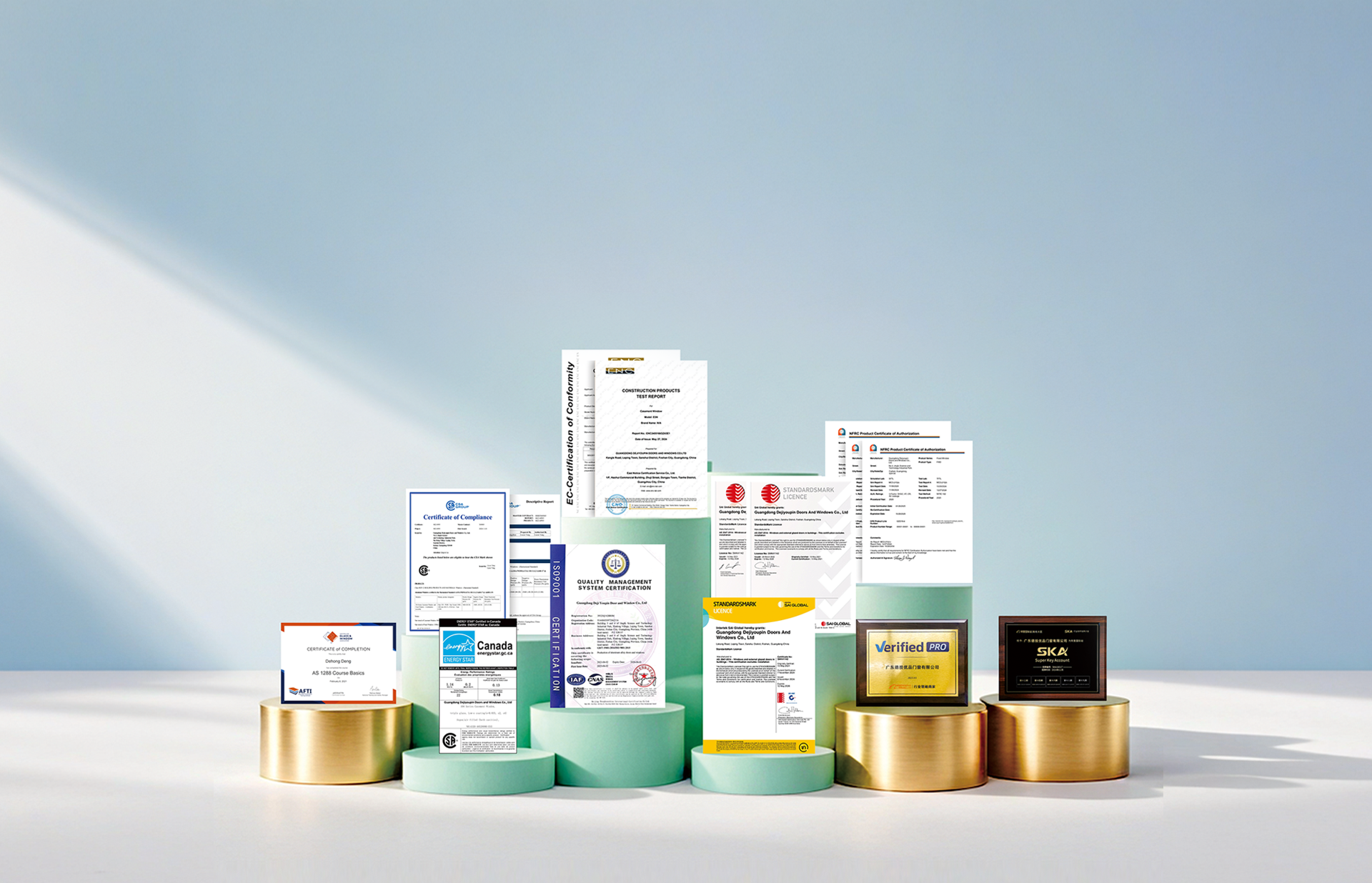
- Comprehensive Global Accreditations: Complete portfolio credentials including European CE (EN 14351-1), US NFRC, Australian AS2047, Canadian CSA, US ENERGY STAR, and ISO 9001.
Whether executing bespoke villa pivot doors, expansive motorized bi-fold patio systems, or thousands of standardized thermal entrance leaves for multi-family master developments, our engineering department of 30+ specialists handles full shop drawing validation, wind-load simulation, and glass thermal modeling.

Four-Side Six-Point Lock
Patented multi-point locking system distributes mechanical clamping forces symmetrically, eliminating leaf sagging, air infiltration, and forced entry points.
Polyamide PA66 GF25 Isolators
Equipped with 25% fiberglass-reinforced Technoform polyamide thermal breaks, isolating exterior aluminum from interior temperatures to prevent condensation.
Qualicoat Seaside Finish
Electrostatically applied AkzoNobel powder coatings and 25μm architectural anodizing engineered specifically for beachfront saline corrosion resistance.
CNC Machined Corners
Cast aluminum internal corner cleats with two-component anaerobic injected structural adhesive guarantee watertight 45° joints under severe wind torsion.
Technological Development Trends in Aluminum Entrance Systems
How next-generation fenestration engineering is reshaping thermal barriers, structural mechanics, and digital access control.
The global fenestration sector is experiencing an unprecedented technical evolution. As energy performance codes (such as the EU Energy Performance of Buildings Directive - EPBD) converge with heightened structural resilience mandates against climate volatility, manufacturers are moving far beyond rudimentary hollow extrusions. The key technological milestones defining state-of-the-art aluminum front doors include:
1. Smart Mechatronic Integration
Modern entry doors feature concealed motorization, 3D biometric facial scanning, and encrypted wireless bus protocols (Matter, Zigbee, KNX) integrated within the multi-chamber profile without breaching thermal insulation zones.
2. Anti-Bimetal Thermal Breaks
Extreme thermal differentials between hot exterior surfaces (up to 80°C in direct sun) and chilled interiors cause standard profiles to bow. Patented split-insulation polyamide bars allow independent expansion, ensuring flawless locking operation.
3. Vacuum Insulated Glazing (VIG)
Next-gen entrance panels integrate 8.3mm tempered VIG units delivering center-of-glass thermal values of Ug = 0.45 W/(m²·K)—matching solid insulated walls while retaining optical transparency and slim profiles.
Furthermore, coplanar structural flush leaves (where the door panel sits entirely flush with the outer frame on both interior and exterior elevations) have established the dominant design aesthetic in premium architecture. Achieving this requires structural wall thicknesses of 2.5mm to 3.0mm in alloy 6063-T6 or 6060-T66, coupled with heavy-duty 3D adjustable concealed hinges capable of supporting leaf weights exceeding 250 kilograms over 200,000 opening cycles (EN 1191 test compliance).
Future Procurement Trends: Strategic Sourcing for Developers & Importers
Navigating carbon taxes, pre-hung modularization, and supply-chain risk mitigation over the 2025–2030 economic cycle.
Procurement directors and commercial contractors are recalibrating international supply chains. Sourcing decisions are no longer determined solely by initial FOB unit price, but by total lifecycle cost, regulatory auditability, and on-site labor minimization:
CBAM & Low-Carbon Aluminum
With the European Carbon Border Adjustment Mechanism (CBAM) entering full fiscal enforcement, Tier-1 exporters are adopting low-carbon secondary-refined or hydro-smelted billets accompanied by verified Environmental Product Declarations (EPD).
Unitized & Pre-Hung Assemblies
High installer wages in Western Europe and North America make field-assembled knock-down frames non-viable. Buyers demand complete unitized entrance kits—factory-glazed, pre-hung in sub-frames with integrated sills and pre-wired sensors—cutting installation labor by 65%.
BIM Object & Digital Twin Sourcing
Institutional project tenders mandate parametric Revit/IFC BIM assets (LOD 300 to LOD 350) prior to RFQ issuance. Forward-thinking exporters provide downloadable, dimension-dynamic digital twins containing accurate thermal, structural, and acoustic metadata.
The Foshan Supply Chain Fortress
Despite geopolitical nearshoring rhetoric, China's Pearl River Delta fenestration ecosystem—centered in Foshan—retains an insurmountable competitive advantage. The hyper-localized supply radius connects precision aluminum billet casting, customized die extrusion, AkzoNobel surface coating lines, and global hardware masters (Siegenia, Roto, GU, Hoppe) within a 30-kilometer logistics corridor.
For overseas contractors, partnering with an established giant like DERCHI translates to 30%–45% capital expenditure efficiency over regional European or domestic fabricators, backed by massive surge capacity that guarantees project completion deadlines without schedule slippage.
Commercial Buyer & Technical Procurement FAQ
Crucial answers to the most common questions raised by project developers, procurement agents, and façade engineers.
1. What technical test documentation is required to verify a supplier's CE certification under EN 14351-1? +
To legally apply the CE mark to external pedestrian doorsets entering the European Economic Area (EEA), the manufacturer must provide a formal Declaration of Performance (DoP) tied to an Initial Type Testing (ITT) report issued by an accredited EU Notified Testing Body (Notified Body - NB).
The DoP must explicitly state performance classes for: Air Permeability (EN 12207), Watertightness (EN 12208), Resistance to Wind Load (EN 12210), Thermal Transmittance (Ud calculated via EN ISO 10077-1/2 or guarded hot-box EN ISO 12567-1), and Dangerous Substances release. Furthermore, the factory must hold a verified ISO 9001 Factory Production Control (FPC) audit log ensuring production units achieve identical tolerances to laboratory test specimens.
2. How does DERCHI's patented Four-Side Six-Point Lock compare to standard commercial locks? +
Standard entry doors utilize single-latch or basic 3-point vertical multi-point locks that leave the top, bottom, and hinge-side jamb edges mechanically vulnerable. Under high negative wind pressure or physical jemmying, the door leaf flexes, creating air gaps or mechanical failure.
DERCHI’s proprietary Four-Side Six-Point Lock activates hardened steel mushroom cams and deadbolts across all four perimeter quadrants—including top header and bottom threshold points. This ensures continuous 360-degree compression of the triple EPDM gasket system, preventing water penetration at 900+ Pa while fulfilling European EN 1627 RC2 / RC3 burglar resistance standards against forced tool attacks.
3. How do you prevent electrochemical corrosion and physical damage during multi-week ocean shipping? +
Export packaging for high-end fenestration is an engineering discipline in itself. DERCHI utilizes a five-tier export packaging protocol:
- Electrostatic Protective Film: 80μm low-tack protective tape applied to all finished aluminum surfaces to guard against abrasions.
- Closed-Cell Foam Wrapping: Multi-layer PE foam cushioning frame profiles against point impacts.
- Reinforced Corner Protectors: Heavy-duty shock-absorbing polypropylene corner cups shielding critical 45° mitre joints.
- Desiccant Injection: Industrial silica gel canisters positioned within wrapped packages to neutralize container humidity spikes.
- Fumigated Solid Plywood Crates: Sealed ISPM-15 compliant plywood crates with internal EPE foam shock blocks, fork-liftable and braced with steel strapping.
4. Can the factory engineer profiles to satisfy regional hurricane codes (such as Florida TAS 201/202/203)? +
Yes. For high-velocity hurricane zones (HVHZ) in the Caribbean, Gulf Coast, or typhoon-prone Pacific belts, DERCHI produces custom structural assemblies. We incorporate reinforced structural mullions with internal steel stiffeners (moment of inertia Ix calculated to project design pressure), 2.5mm+ profile wall thicknesses, and laminated impact glass make-ups (e.g., 6mm Low-E Tempered + 2.28mm SentryGlas / PVB + 6mm Clear Tempered). These assemblies withstand severe cyclic pressure loading and large-missile 9-pound timber impact tests.
5. What are the typical prototype lead times, production schedules, and minimum order quantities (MOQ)? +
Our 180,000 m² base supports both bespoke architectural commissions and mega-volume contract schedules:
- CAD / BIM Shop Drawing Approval: 3–5 working days upon receiving architectural elevations.
- Custom Sample / Prototype Lead Time: 12–18 calendar days.
- Full Container Load (FCL) Mass Production: 25–35 calendar days following deposit and detail sign-off.
- Minimum Order Quantity (MOQ): We offer flexible terms for commercial mock-ups (MOQ ≥ 1 unit for custom villa pivot doors; MOQ ≥ 20 units for standard multi-residential packages).
6. How do you prevent the "Bimetal Effect" in dark-colored entrance doors exposed to direct equatorial sun? +
When dark finishes (RAL 7016 Anthracite Grey, RAL 9005 Jet Black) absorb solar radiation, outer surface temperatures can exceed 80°C while interior conditioned spaces remain at 22°C. In conventional rigid thermal break profiles, this 60°C temperature delta causes outward deflection (bending up to 8mm), resulting in air leakage and latch jamming.
DERCHI solves this through Anti-Bimetal Thermal Strips. By utilizing specially engineered two-part split polyamide bars with mechanical sliding planes, the exterior aluminum leaf expands independently of the structural interior frame, ensuring leaf coplanarity and flawless latching even under peak solar exposure.
Request Technical Submittals, CAD Details, & Project Estimates
Collaborate directly with our Foshan engineering desk. Send us your architectural opening schedules, required U-values, and hardware specifications for a comprehensive technical tender package within 24 hours.