Aluminium Sliding Doors are widely used in homes, offices, hotels, and commercial spaces across China. Their slim frames can bring more daylight into a room, while sliding panels help save space near patios and corridors. Details matter. Track design, frame thickness, glass options, drainage, and hardware all affect daily performance. A door may look elegant in a catalog yet feel difficult to operate after installation.
This guide introduces China-based Aluminium Sliding Doors manufacturers and suppliers, along with practical points for comparing them. Buyers can review product specifications, customization options, production capacity, quality checks, packaging, and after-sales support. Ask how suppliers test rollers and locks, and request clear drawings before confirming dimensions. Samples, factory documentation, and recent project references can help verify what a company says. Still, no checklist replaces careful communication. Some specifications may be unclear or vary between product series, so confirm them in writing. That small step can prevent costly misunderstandings. Whether sourcing for a renovation or a larger building project, match the door system to the opening, local climate, and expected use. A reliable supplier should answer technical questions directly and explain limitations, not just present attractive photos. The following overview offers a grounded starting point for finding a suitable partner.
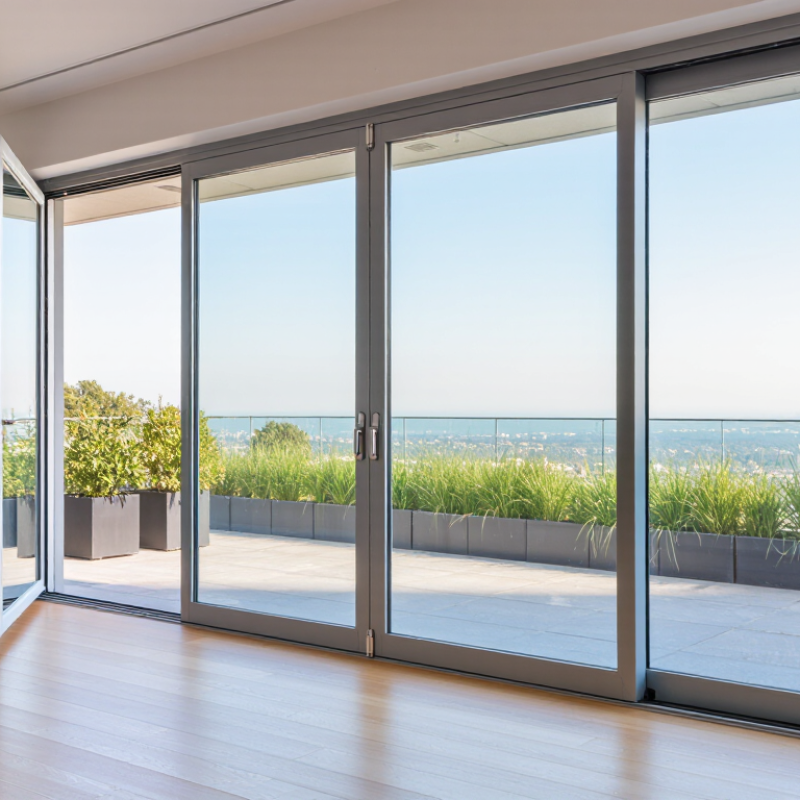
Aluminium sliding doors combine a slim frame with broad glass panels, bringing daylight into kitchens, patios, and living areas. Their performance depends on more than appearance. The frame supports the glass, while rollers carry each panel along a track. Brush seals help limit drafts, and drainage slots guide rainwater away. Small details matter.
Common designs include two-panel doors, where one panel slides past a fixed panel, and multi-panel systems that create wider openings. Lift-and-slide designs raise the panel slightly before movement, which can help with heavier glass. Choose safety glass and hardware suited to the panel’s weight. A wider opening looks clean, but it is not always easier to use; check clear passage width and track height at the actual site. Coastal exposure, frequent use, and uneven floors can also affect material and installation choices.
Tips: Ask how rollers can be adjusted or replaced, and inspect the track for debris. Confirm drainage details before installation. These checks are easy to overlook, and a beautiful door can still feel awkward if it sticks.
How Aluminium Sliding Doors Are Manufactured in China
Manufacturing begins with aluminium billets, which are heated and pressed through shaped dies to form door profiles. The extrusions are cooled, aged for strength, and cut to project dimensions. For thermally improved frames, factories insert insulating strips between inner and outer profile sections. Corners are then joined, drainage paths machined, and rollers and locking hardware fitted. Glass, weather seals, and sliding panels complete the assembly. Small errors matter: a misaligned track can make a heavy panel drag.
China’s National Bureau of Statistics reported 41.594 million tonnes of primary aluminium production in 2023. This figure describes the wider material supply, not door output, but it shows the industrial scale behind profile manufacturing. Surface treatments commonly include powder coating or anodising; quality checks can cover dimensions, coating finish, hardware operation, and water resistance. Processes and test depth vary between factories. A polished sample alone is not proof of consistent production.
Tips: Ask for profile drawings, alloy and coating specifications, and inspection records from the actual production batch. Check that sample doors slide smoothly under load. Small practical detail. Also confirm how the factory protects finished frames during packing and transport.
| Manufacturing Stage | Main Materials or Equipment | Typical Production Activity | Quality Checks | Buyer Considerations |
|---|---|---|---|---|
| 1. Design and specification | Project drawings, opening measurements, hardware and glazing specifications | The supplier confirms the door configuration, panel count, frame dimensions, opening direction, finish and applicable project requirements before production. | Drawing review; confirmation of overall dimensions, sightlines, drainage approach and hardware compatibility. | Provide verified opening sizes and state whether dimensions are for the frame, finished opening or installation allowance. |
| 2. Aluminium profile preparation | Architectural aluminium extrusions; 6063-series alloys are commonly used for architectural profiles | Profiles for frames, tracks, stiles and rails are selected, identified and checked against the approved system and cutting schedule. | Visual inspection for dents, scratches and surface defects; profile and section checks against drawings. | Ask for the profile-system details and material documentation relevant to the project. Profile dimensions vary by system and design. |
| 3. Cutting and machining | Precision saws, CNC machining equipment, drilling and milling tools | Extrusions are cut to specified lengths and machined for joints, locks, rollers, drainage and other hardware openings. | Cut length, angle, hole location and machining-position checks; parts are matched to the production drawings. | Confirm that machining is based on the approved hardware and that drainage paths are not blocked during assembly. |
| 4. Surface finishing | Powder-coating line or anodizing process, depending on the specified finish | Profiles receive the selected surface treatment after the preparation steps required by the chosen finishing process. | Colour and appearance inspection; coating or anodizing checks are performed against the agreed finish specification. | Specify finish colour, gloss or texture, exposed-face requirements and any applicable coating standard in the purchase documents. |
| 5. Frame and sash assembly | Prepared profiles, corner connectors or fasteners, seals and assembly jigs | Frame and moving-panel components are assembled, aligned and fitted with the designed seals and joining components. | Squareness, alignment, joint fit and overall dimensional checks; inspection for assembly damage. | Confirm the number of sliding panels, fixed panels and opening direction on the approved shop drawings. |
| 6. Glass and hardware installation | Specified glazing, setting blocks, glazing gaskets, rollers, locks and handles | Glass is installed and supported as designed; rollers and operating hardware are fitted and adjusted for the door system. | Glass identification and visual checks; hardware fit, panel movement and locking operation checks. | Glass type and thickness must be selected for the design, local code and project requirements; safety glazing may be required in certain locations. |
| 7. Final inspection and functional testing | Measuring tools, inspection gauges and representative finished assemblies | Completed doors are checked before packing. Testing may include operation, locking, dimensions and project-specified performance tests. | Documented inspection against approved drawings and order requirements; test reports should identify the tested product configuration. | Air, water and structural performance depend on the complete system and test setup. Request applicable reports for the specified configuration. |
| 8. Protection, packing and dispatch | Protective film, corner guards, separators and suitable export packaging | Finished profiles, glass and hardware are protected and packed to reduce movement and surface damage during handling and transport. | Packing-list and quantity checks; inspection of labels, protection and shipment documentation. | Agree on packaging, handling instructions, shipping marks and responsibility for unloading before dispatch. |
Note: Manufacturing methods, materials, finishes, testing and performance vary by door system and project specification. Confirm all dimensions and requirements with approved shop drawings and product documentation.
For aluminium sliding doors, a certificate is useful only when its scope matches the product being purchased. Chinese suppliers may hold quality-management certificates, but these do not automatically prove that every door model meets project requirements. Ask for the certificate’s issuing body, validity dates, covered factory, and product scope. Check that test reports identify the same frame profiles, glass configuration, hardware, and dimensions as your order.
Performance evidence matters at least as much as paperwork. Request results for air leakage, water penetration, wind-load resistance, and thermal performance where relevant to the destination market. Reports should name the test method and laboratory, with clear sample details. Small changes can matter: a different gasket or roller may affect operation and sealing. Look closely.
A practical review can include factory quality procedures, incoming aluminium inspection records, coating thickness checks, and final-door inspection sheets. ISO 9001 can indicate a documented management system, yet it is not a product-performance certificate. Verify market-specific requirements with the project’s qualified professionals, since standards and building codes differ by location. Documents may be current while production varies between batches; that gap deserves attention. Requesting a pre-shipment inspection and retaining approved samples can reduce uncertainty, though neither guarantees flawless installation or long-term performance.
The chart illustrates a typical three-year ISO 9001 certification cycle: one initial certification audit, two surveillance audits, and one recertification audit. Actual schedules depend on the certification body and audit arrangements. For product requirements, GB/T 8478-2020 covers aluminium alloy windows and doors; ISO 9001 concerns quality management systems and does not by itself certify a specific door product. Buyers should verify certificates, scope, validity, and applicable destination-market requirements.
When evaluating China’s aluminium sliding door manufacturers, look beyond catalog images and headline prices. Request drawings that show frame depth, sash thickness, glass options, drainage paths, and hardware. Ask how the supplier checks diagonal measurements and corner joints on finished frames. Small gaps can become drafts or sticking panels. Details matter.
Review evidence, not promises. Ask for current test reports relevant to the quoted door configuration, plus material and finish specifications. A report for a different profile or glass build-up may tell you little. Request a sample corner, coating swatch, and operating video; inspect color consistency, seal compression, roller movement, and lock alignment. If possible, arrange a factory audit or independent pre-shipment inspection. Photos help, but they do not reveal everything.
Compare lead times, packaging, replacement-part availability, and written warranty terms alongside price. Confirm who handles technical questions and how revisions are recorded. Clear replies usually make coordination easier. Not always. A supplier may answer quickly yet avoid precise tolerances or test details. Note those gaps and ask again. No checklist removes uncertainty, and overchecking can slow a project. Record unanswered questions beside the relevant drawing revision.
China’s aluminium sliding door suppliers can customize frame depth, track layout, glass thickness, finish, and hardware to match project drawings. Before requesting quotes, provide opening dimensions, wall construction, wind exposure, and expected daily use. A 2.4-meter opening with a low threshold may need different rollers and drainage than a sheltered balcony. Ask whether dimensions refer to the frame or the clear opening. Small difference, big impact.
Pricing depends on profile specifications, glazing, surface treatment, locking options, packaging, and order volume. Request an itemized quote separating product costs, sample charges, packing, and inland transport. Confirm the Incoterm, currency, payment milestones, lead time, and inspection arrangements. Export planning also involves crate dimensions, gross weight, installation instructions, and spare hardware. For coastal projects, specify corrosion-resistant components and ask how finish quality is checked. One detail is easy to miss: replacement parts may be difficult to source if hardware is not standardized.
Tips: Send a marked-up elevation and hardware schedule, not just a product photo. Approve a physical finish sample in daylight. Check glass safety markings and local performance requirements with a qualified project professional. Allow time for pre-shipment inspection, but do not treat it as a substitute for clear specifications. Suppliers may interpret “custom” differently; discuss that early.
Ask for frame depth, sash thickness, glass options, drainage paths, and hardware. Confirm whether measurements describe the frame or clear opening. Small gaps matter.
Match each report to the quoted profile and glass build-up. A report for another configuration may offer little useful evidence.
Check coating color in daylight, seal compression, roller movement, and lock alignment. A sample corner can reveal uneven joints. Photos cannot show everything.
Share opening dimensions, wall construction, wind exposure, and expected daily use. A 2.4-meter opening with a low threshold may need different rollers and drainage.
Separate product costs, samples, packing, and inland transport. Confirm currency, payment milestones, delivery terms, lead time, and inspection arrangements. Easy to miss.
Request crate dimensions, gross weight, installation instructions, and spare hardware details. Check replacement-part availability before approving the hardware schedule.
No. Set clear tolerances and record revisions beside the relevant drawings. Inspection helps, but it cannot fix unclear specifications. That part is easy to underestimate.
Specify corrosion-resistant components and ask how finish quality is checked. Confirm glass markings and local performance requirements with a qualified project professional. Details can slip.
Aluminium Sliding Doors combine clean design with practical performance, making them suitable for homes, offices, and commercial spaces. This overview explains common door styles, frame and hardware components, and how different configurations can support varied layouts. It also outlines the main stages of manufacturing in China, from material selection and profile processing to assembly and inspection, while highlighting the role of quality standards and certifications in assessing product consistency and safety.
For buyers comparing Chinese manufacturers and suppliers, the article presents practical evaluation factors, including production capability, workmanship, communication, and quality-control procedures. It also considers customization options such as dimensions, finishes, glazing, and hardware, alongside the factors that influence pricing. Finally, it discusses export planning, including packaging, lead times, shipping arrangements, and clear specification requirements, helping buyers make informed decisions and coordinate orders more effectively.